
Introduction: Why Trading Is More Like Professional Sports Than You Think
At first glance, trading and professional sports seem completely different.
One takes place on a field.
The other takes place on a chart.
But when you look deeper, the similarities become undeniable.
Both environments demand:
- Precision under pressure
- Emotional control
- Consistent execution
At Quant Funded, we see this clearly:
👉 The traders who succeed are not just skilled—they think and operate like professional athletes.
Understanding this connection can completely change how you approach trading.
1. Discipline Is the Foundation of Success
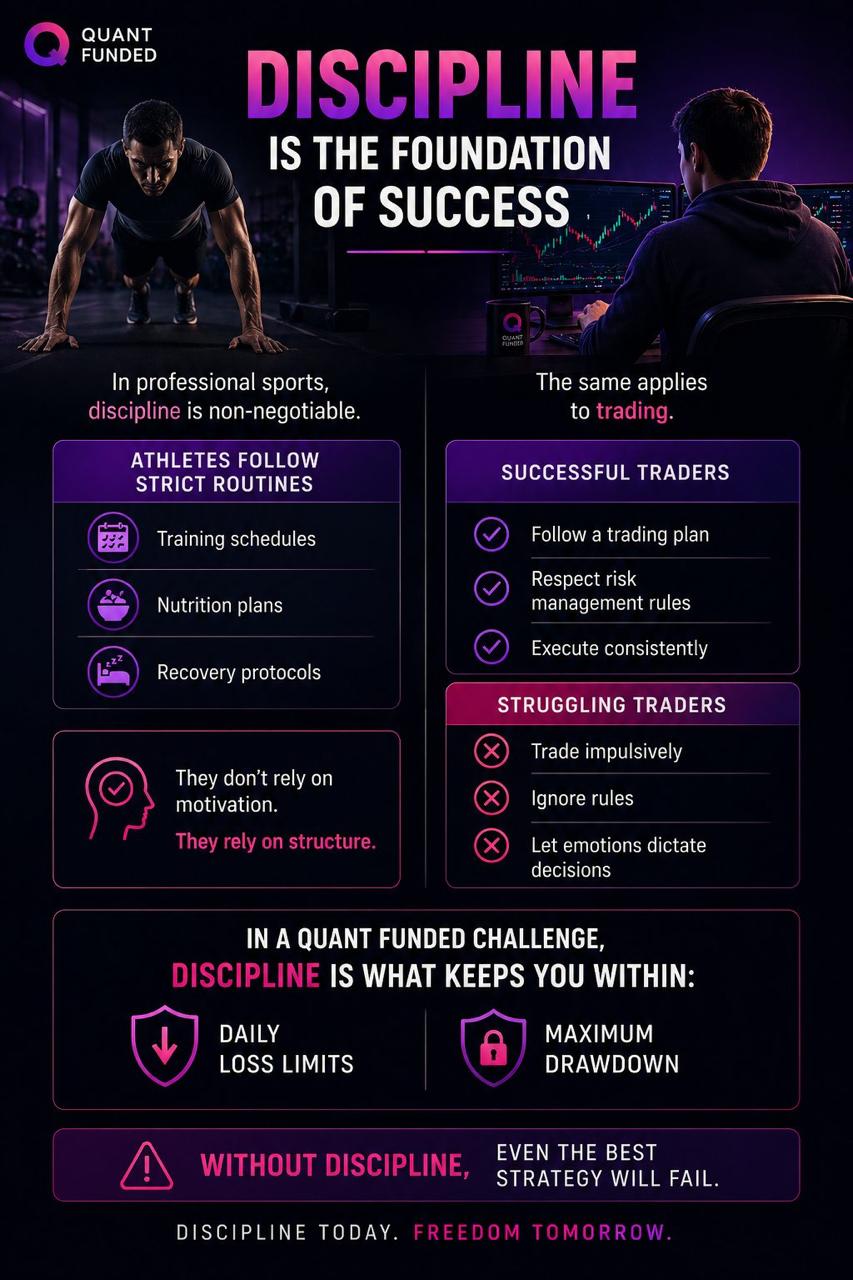
In professional sports, discipline is non-negotiable.
Athletes follow strict routines:
- Training schedules
- Nutrition plans
- Recovery protocols
They don’t rely on motivation.
👉 They rely on structure.
The same applies to trading.
Successful traders:
- Follow a trading plan
- Respect risk management rules
- Execute consistently
While struggling traders:
- Trade impulsively
- Ignore rules
- Let emotions dictate decisions
In a Quant Funded Challenge, discipline is what keeps you within:
👉 Daily loss limits
👉 Maximum drawdown
Without discipline, even the best strategy will fail.
2. Preparation Creates Confidence
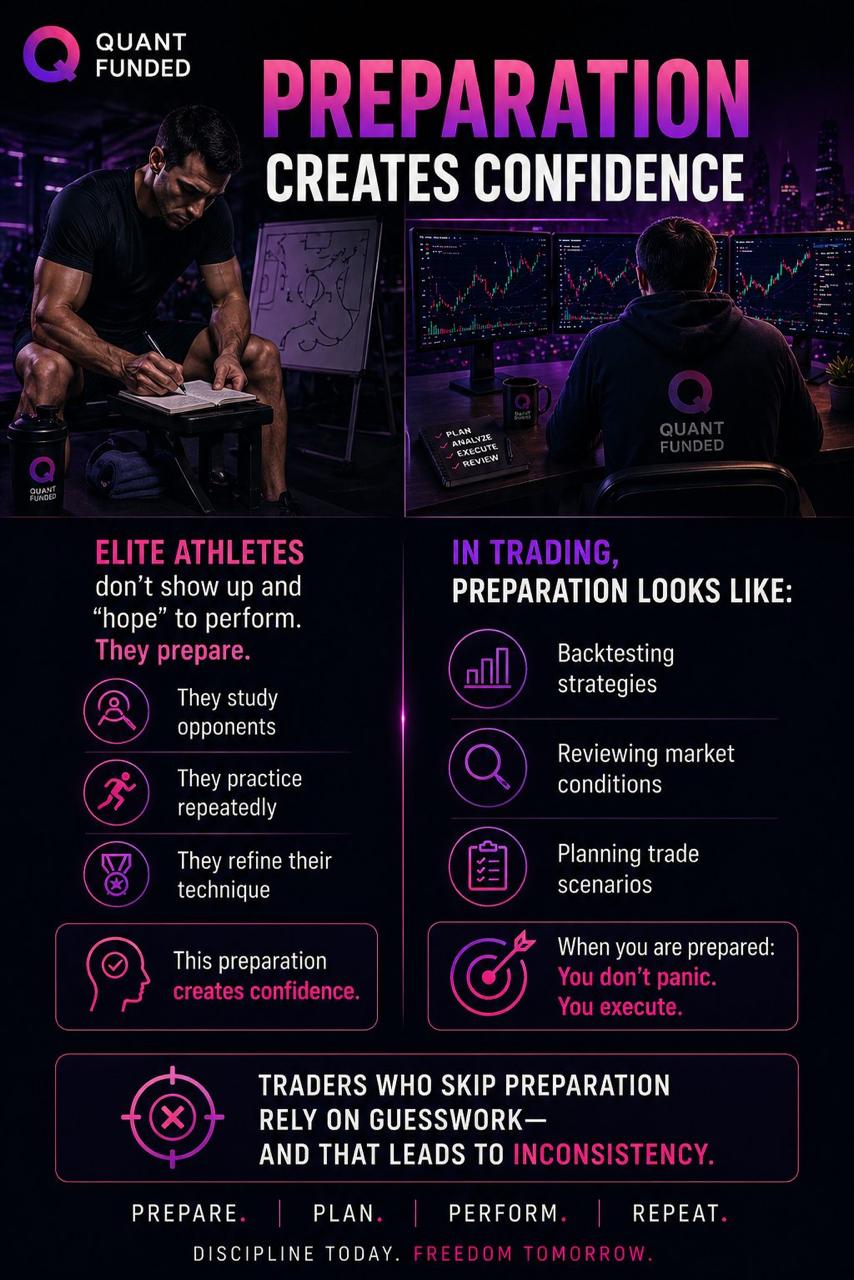
Elite athletes don’t show up and “hope” to perform.
They prepare.
- They study opponents
- They practice repeatedly
- They refine their technique
This preparation creates confidence.
In trading, preparation looks like:
- Backtesting strategies
- Reviewing market conditions
- Planning trade scenarios
When you are prepared:
👉 You don’t panic.
You execute.
Traders who skip preparation rely on guesswork—and that leads to inconsistency.
3. Performing Under Pressure
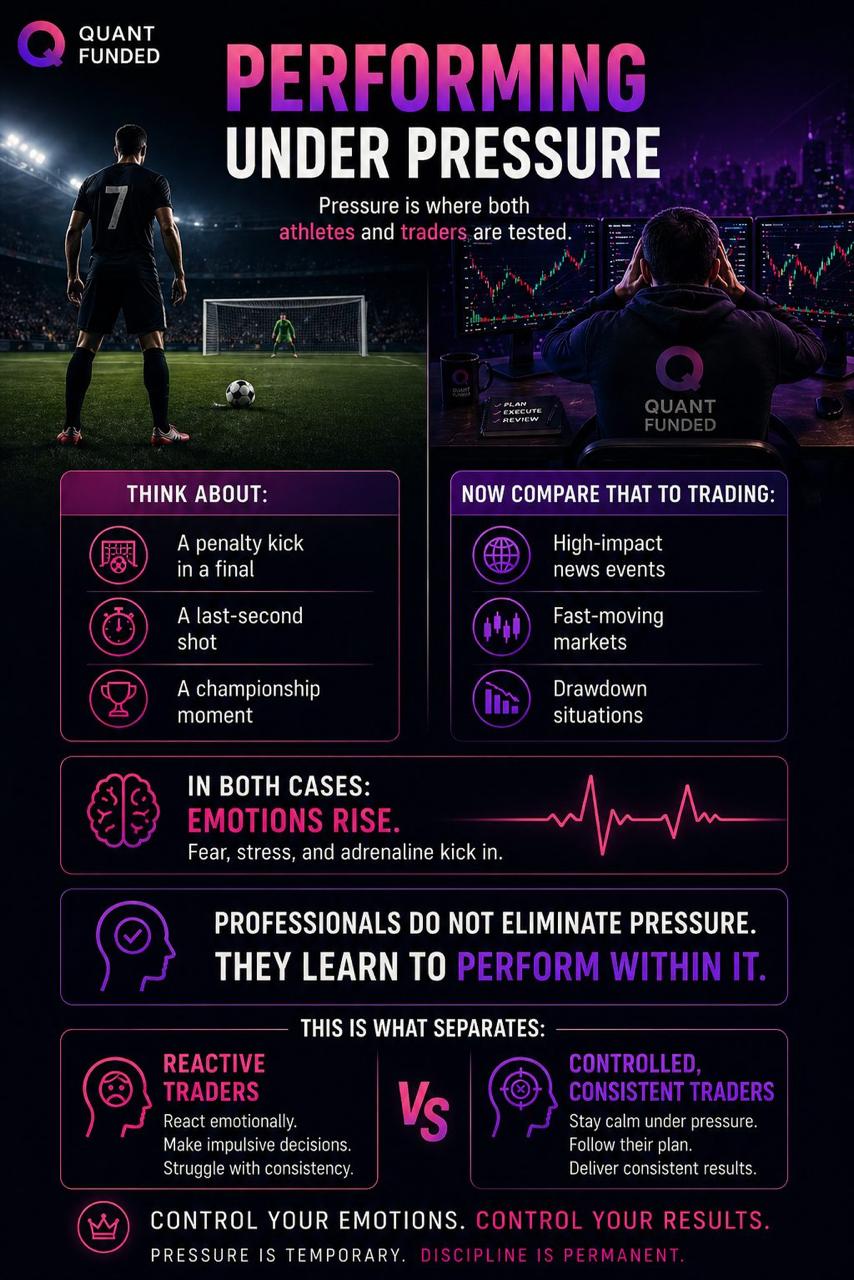
Pressure is where both athletes and traders are tested.
Think about:
- A penalty kick in a final
- A last-second shot
- A championship moment
Now compare that to trading:
- High-impact news events
- Fast-moving markets
- Drawdown situations
In both cases:
👉 Emotions rise.
Fear, stress, and adrenaline kick in.
Professionals do not eliminate pressure.
👉 They learn to perform within it.
This is what separates:
- Reactive traders
- From controlled, consistent traders
4. Resilience After Losses
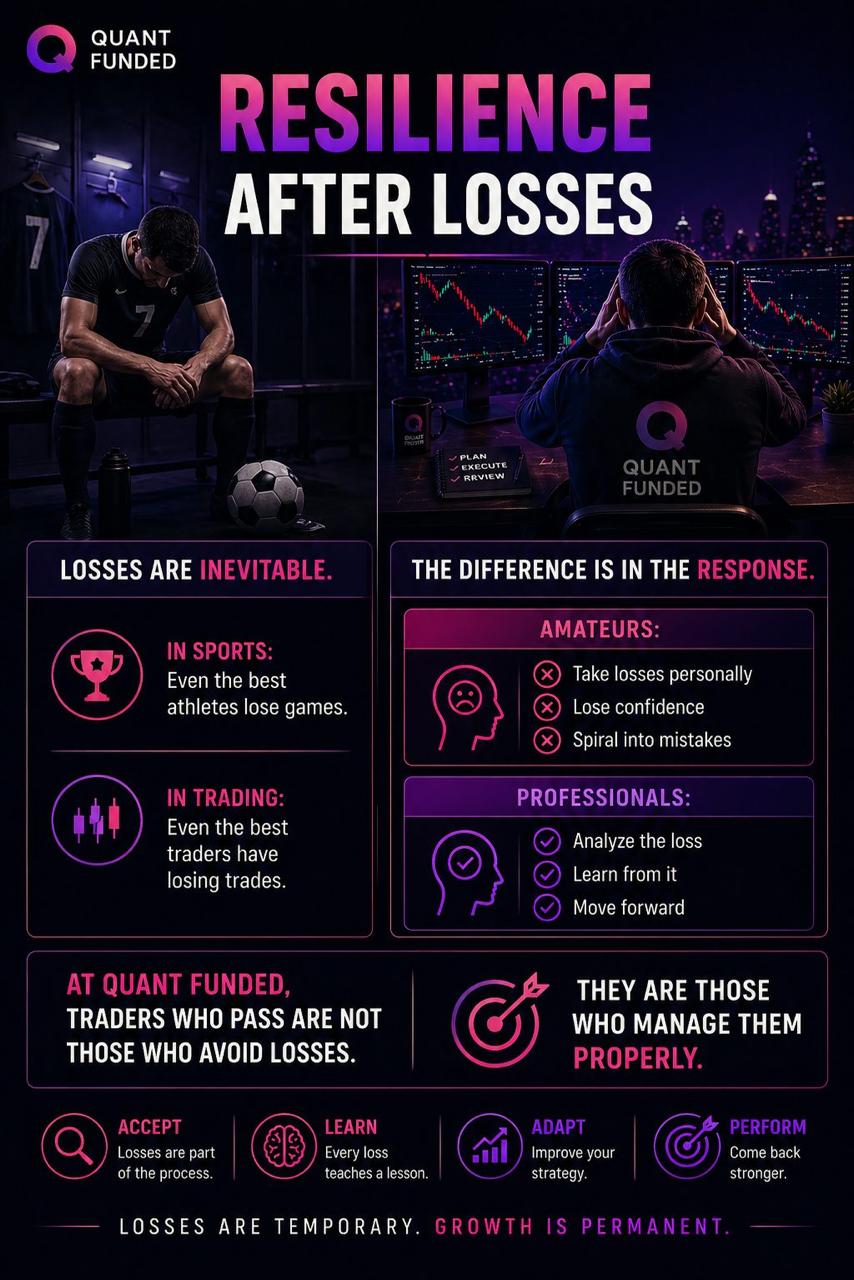
Losses are inevitable.
In sports:
- Even the best athletes lose games
In trading:
- Even the best traders have losing trades
The difference is in the response.
Amateurs:
- Take losses personally
- Lose confidence
- Spiral into mistakes
Professionals:
- Analyze the loss
- Learn from it
- Move forward
At Quant Funded, traders who pass are not those who avoid losses.
👉 They are those who manage them properly.
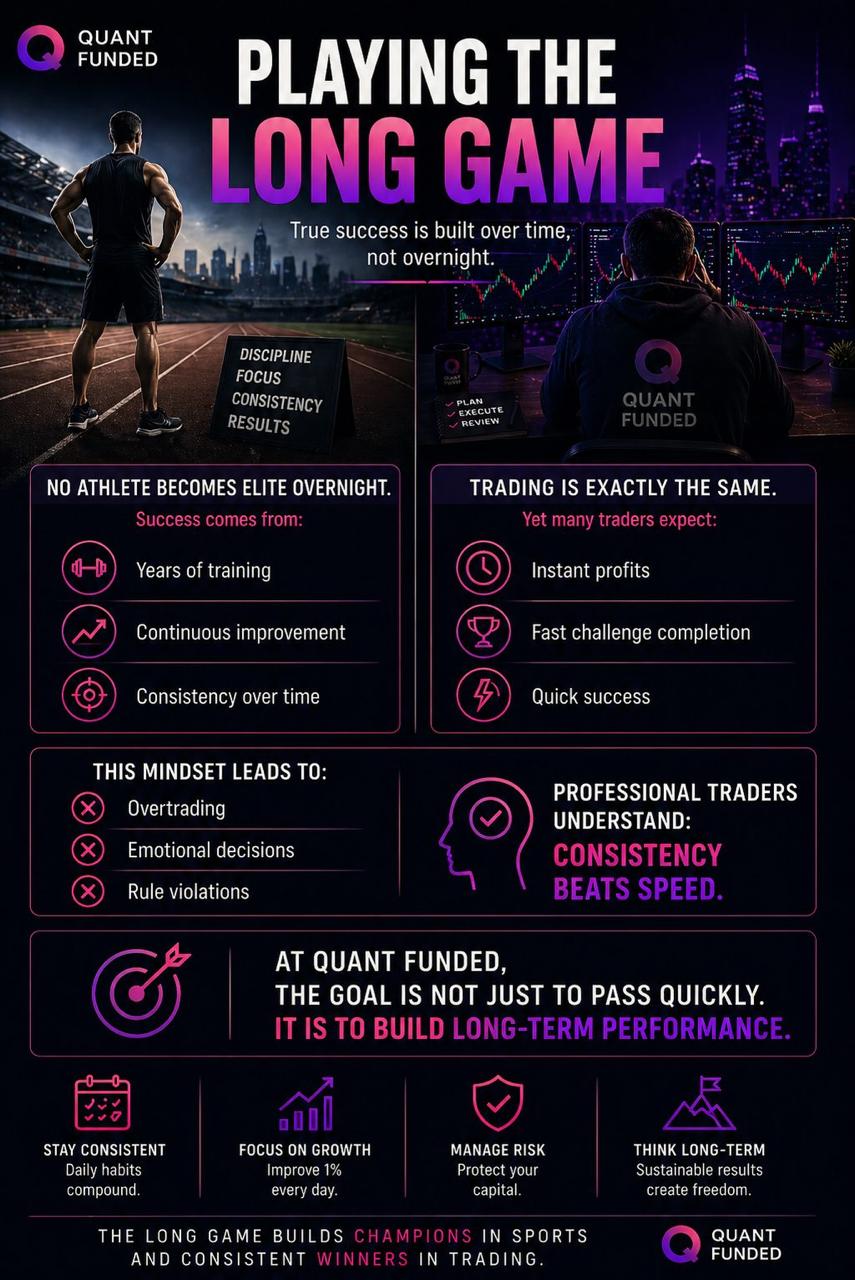
5. Playing the Long Game
No athlete becomes elite overnight.
Success comes from:
- Years of training
- Continuous improvement
- Consistency over time
Trading is exactly the same.
Yet many traders expect:
- Instant profits
- Fast challenge completion
- Quick success
This mindset leads to:
👉 Overtrading
👉 Emotional decisions
👉 Rule violations
Professional traders understand:
👉 Consistency beats speed.
At Quant Funded, the goal is not just to pass quickly.
👉 It is to build long-term performance.
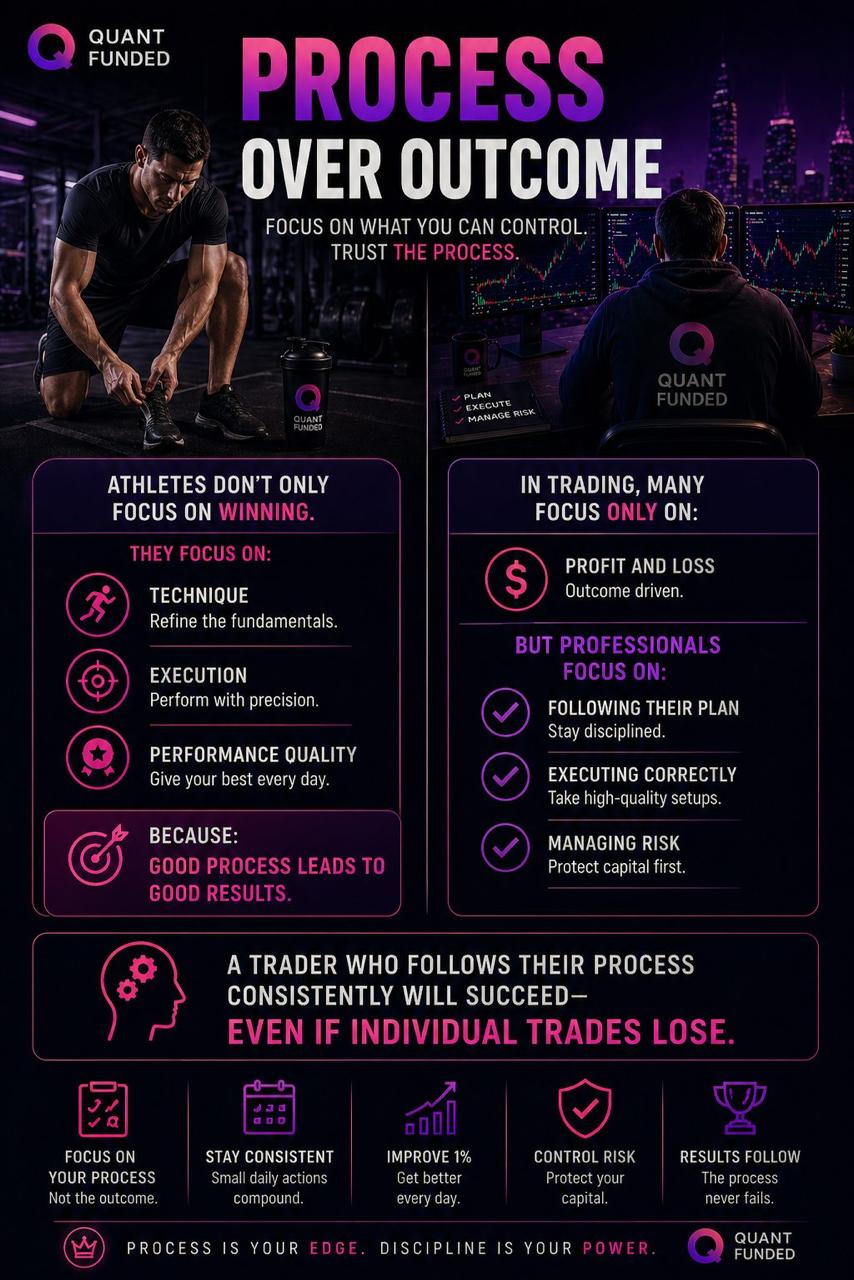
6. Process Over Outcome
Athletes don’t only focus on winning.
They focus on:
- Technique
- Execution
- Performance quality
Because:
👉 Good process leads to good results.
In trading, many focus only on:
- Profit and loss
But professionals focus on:
- Following their plan
- Executing correctly
- Managing risk
A trader who follows their process consistently will succeed—even if individual trades lose.
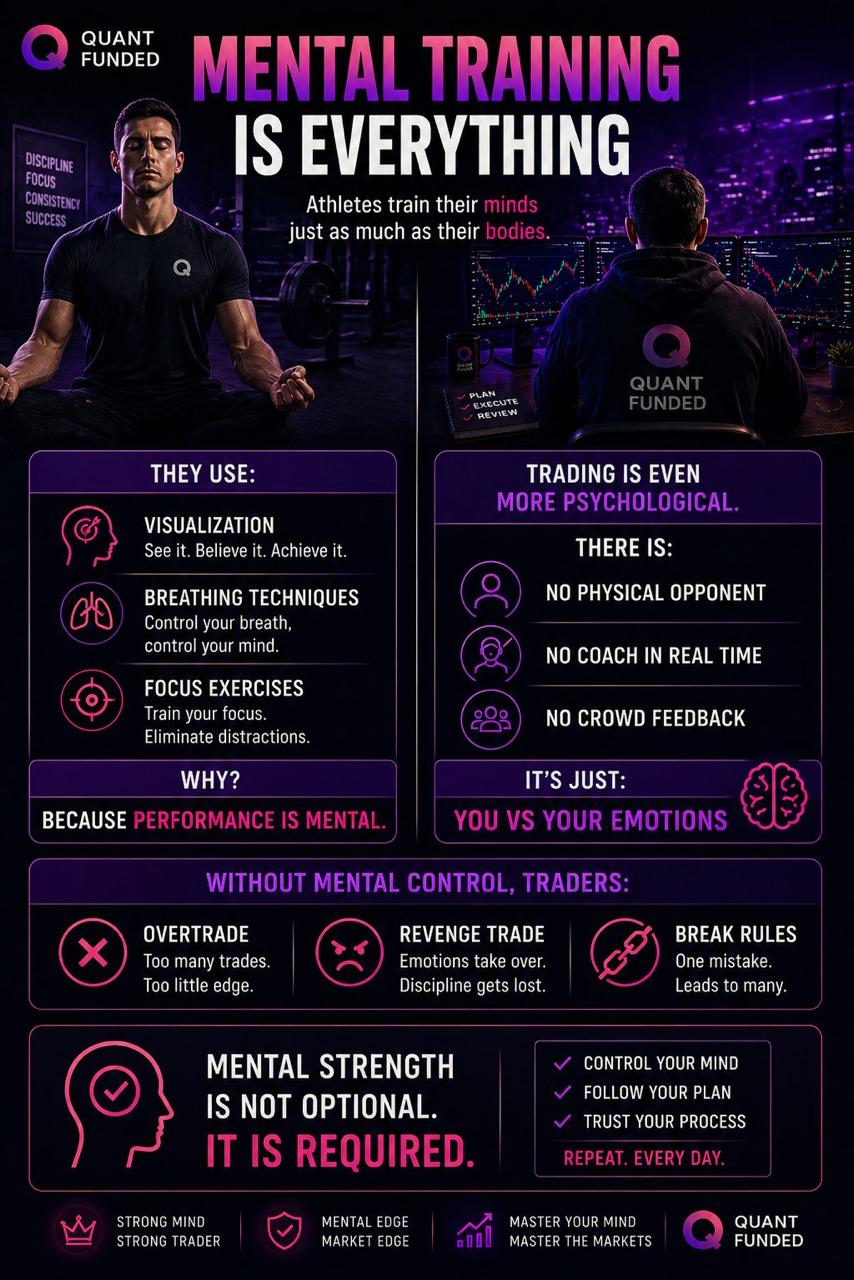
7. Mental Training Is Everything
Athletes train their minds just as much as their bodies.
They use:
- Visualization
- Breathing techniques
- Focus exercises
Why?
Because performance is mental.
Trading is even more psychological.
There is:
- No physical opponent
- No coach in real time
- No crowd feedback
It’s just:
👉 You vs your emotions
Without mental control, traders:
- Overtrade
- Revenge trade
- Break rules
Mental strength is not optional.
👉 It is required.
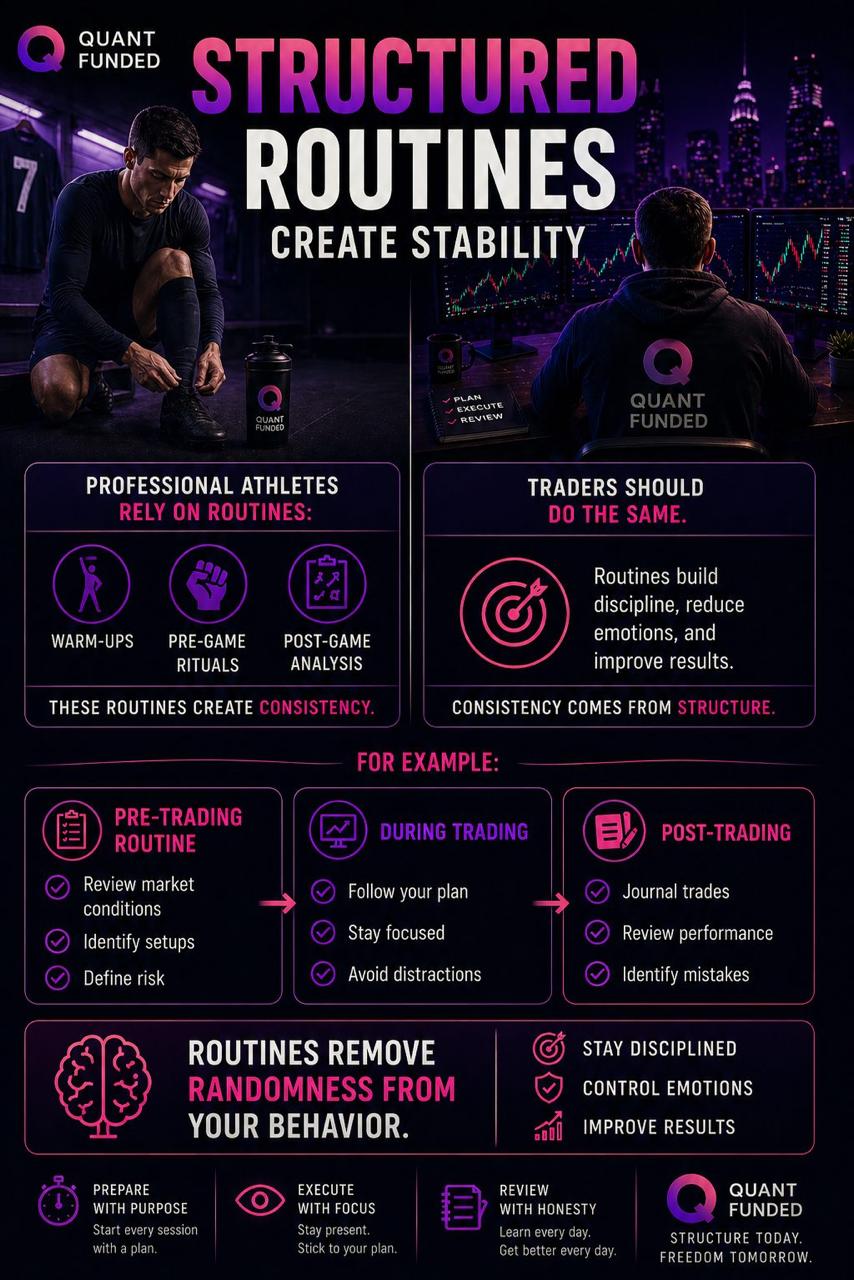
8. Structured Routines Create Stability
Professional athletes rely on routines:
- Warm-ups
- Pre-game rituals
- Post-game analysis
These routines create consistency.
Traders should do the same.
For example:
Pre-Trading Routine
- Review market conditions
- Identify setups
- Define risk
During Trading
- Follow your plan
- Stay focused
- Avoid distractions
Post-Trading
- Journal trades
- Review performance
- Identify mistakes
Routines remove randomness from your behavior.
9. Recovery Prevents Burnout
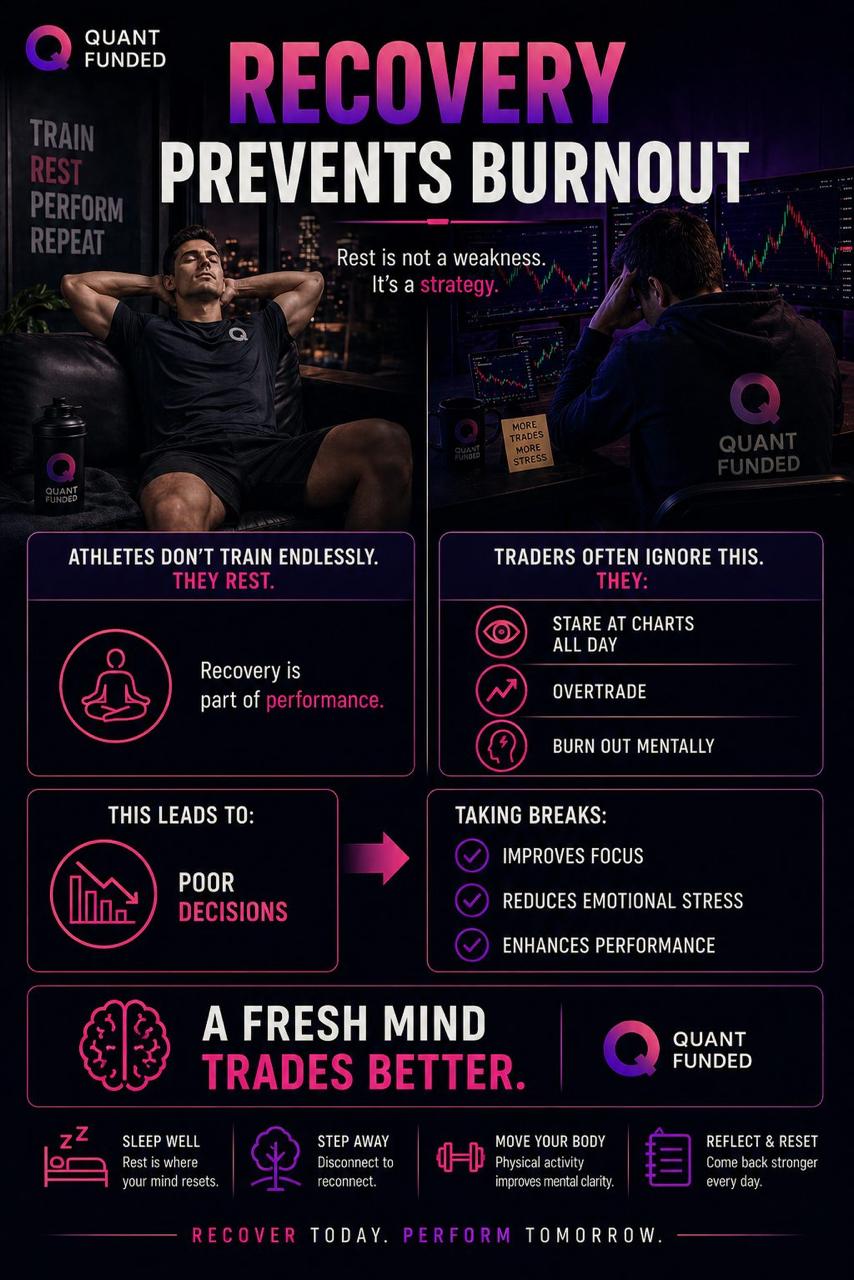
Athletes don’t train endlessly.
They rest.
Recovery is part of performance.
Traders often ignore this.
They:
- Stare at charts all day
- Overtrade
- Burn out mentally
This leads to:
👉 Poor decisions
Taking breaks:
- Improves focus
- Reduces emotional stress
- Enhances performance
A fresh mind trades better.
10. Accountability Drives Growth
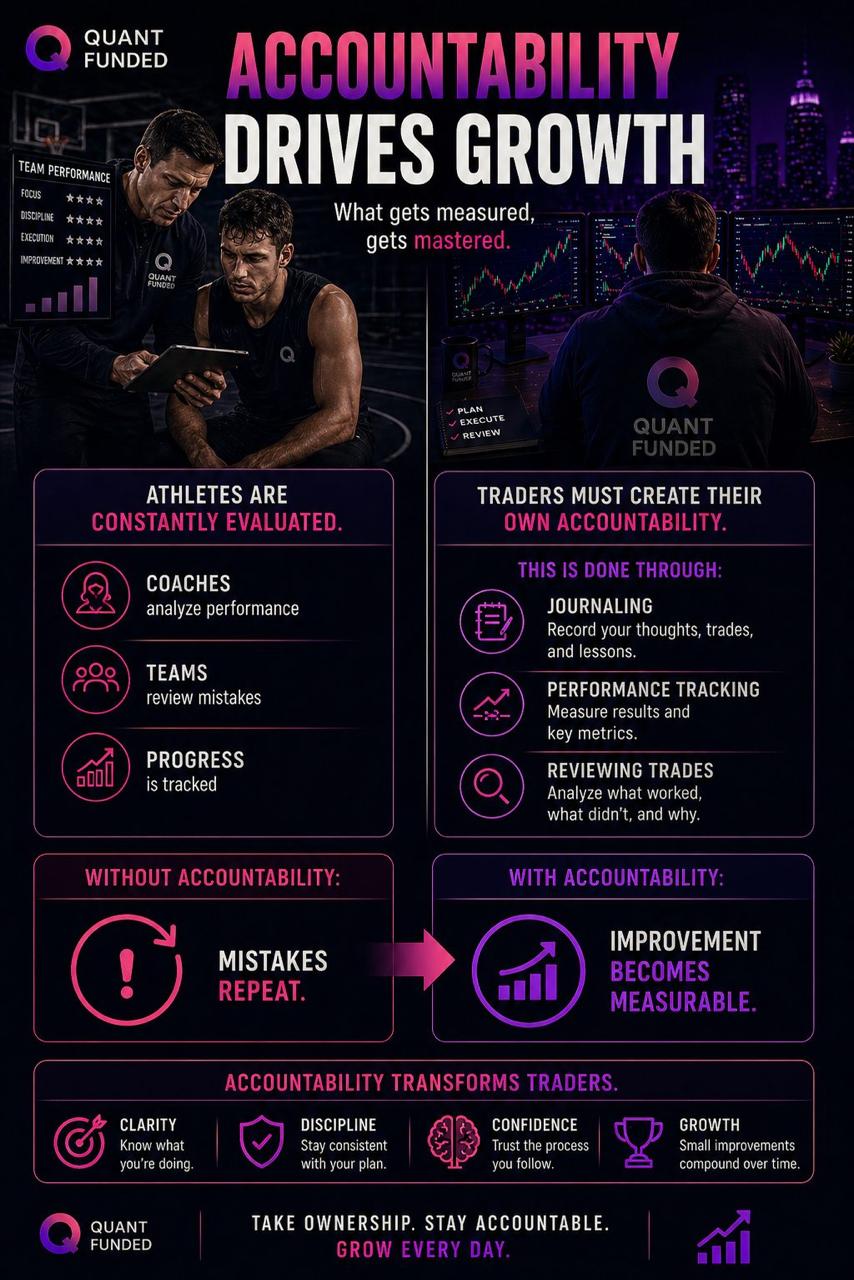
Athletes are constantly evaluated.
- Coaches analyze performance
- Teams review mistakes
- Progress is tracked
Traders must create their own accountability.
This is done through:
- Journaling
- Performance tracking
- Reviewing trades
Without accountability:
👉 Mistakes repeat
With accountability:
👉 Improvement becomes measurable
How This Applies to a Quant Funded Challenge
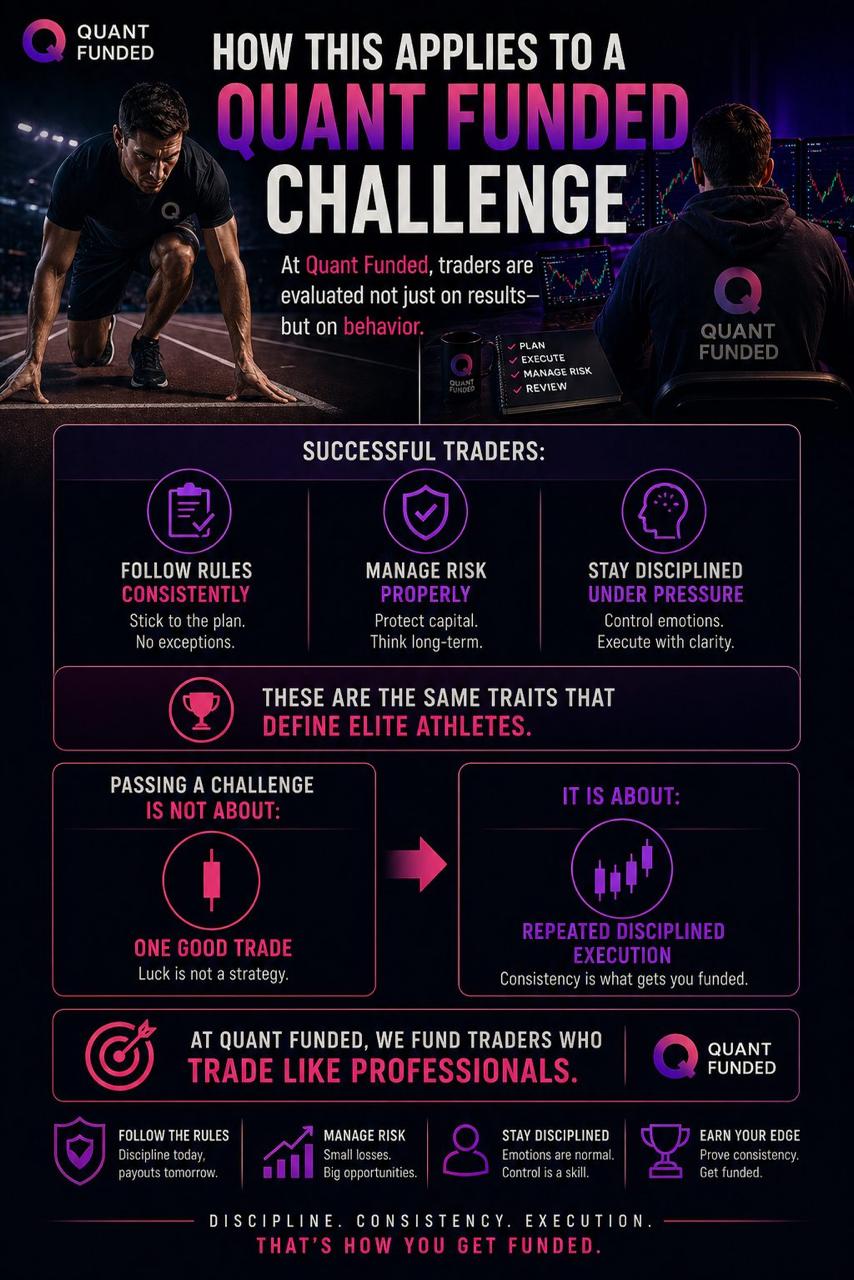
At Quant Funded, traders are evaluated not just on results—but on behavior.
Successful traders:
- Follow rules consistently
- Manage risk properly
- Stay disciplined under pressure
These are the same traits that define elite athletes.
Passing a challenge is not about:
👉 One good trade
It is about:
👉 Repeated disciplined execution
Conclusion: Trade Like an Athlete, Win Like a Professional
Trading is not just a skill.
It is a performance discipline.
Just like professional sports, it requires:
- Preparation
- Discipline
- Mental strength
- Consistency
If you approach trading casually:
👉 You will get inconsistent results
If you approach it like a professional athlete:
👉 You build long-term success
At Quant Funded, the traders who succeed are those who understand this.
Because in the end:
👉 Trading is not about talent.
👉 It is about execution under pressure.
And the traders who master that…
👉 Win consistently.