
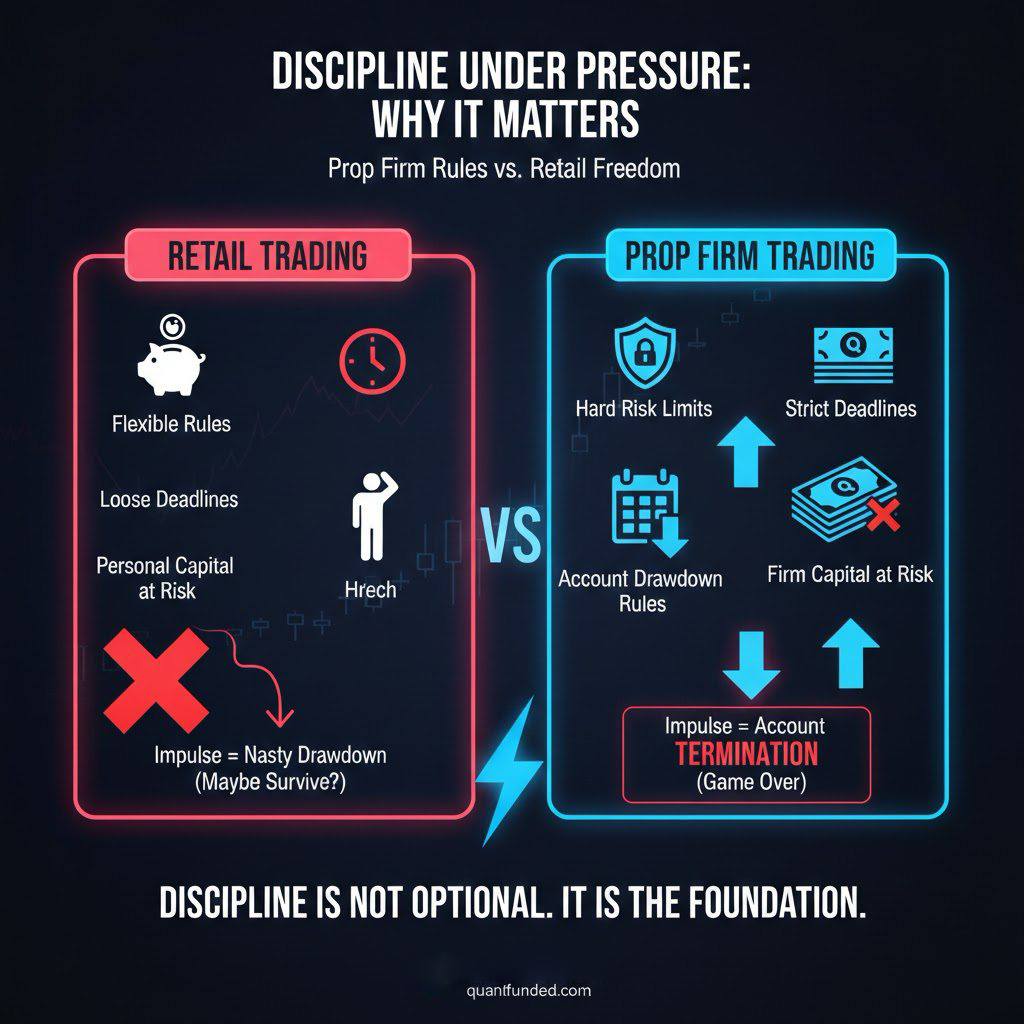
In trading, the biggest challenge is rarely market conditions, strategy complexity, or lack of opportunity. For most traders, the real battle happens internally — between discipline and impulse.
At Quant Funded, we consistently see one defining difference between traders who pass evaluations and those who fail: discipline under pressure. Not intelligence. Not strategy variety. Discipline.
Understanding the psychological conflict between disciplined execution and impulsive decision-making is one of the most important steps toward becoming a consistently profitable trader — especially in a prop firm environment.
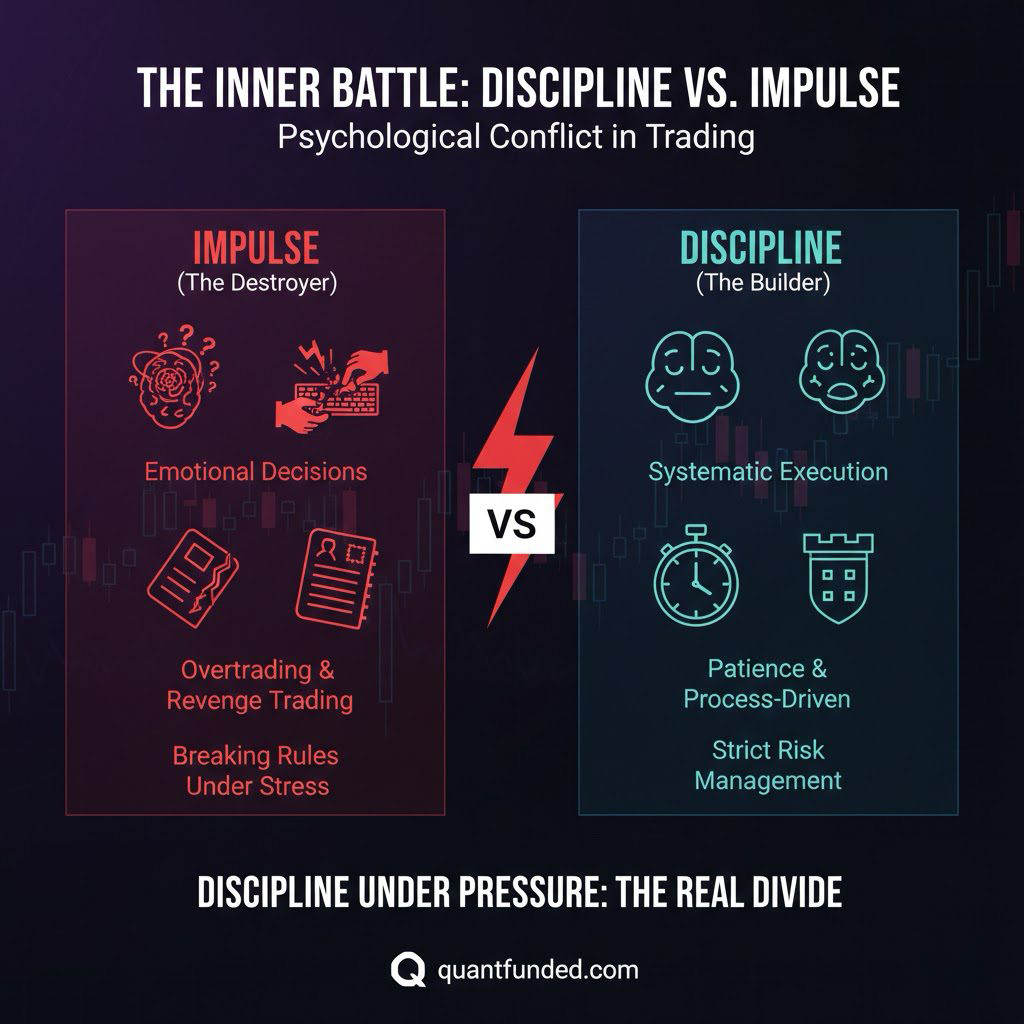
What Is Trading Discipline?
Trading discipline is the ability to follow a predefined plan consistently, regardless of emotions, recent results, or market noise.
A disciplined trader:
- Executes only validated setups
- Respects risk limits on every trade
- Accepts losses without emotional reaction
- Prioritizes consistency over excitement
Discipline means doing the right thing even when it feels uncomfortable.
In a prop firm structure, discipline is not optional — it is the foundation that allows traders to protect capital and operate within strict risk parameters.
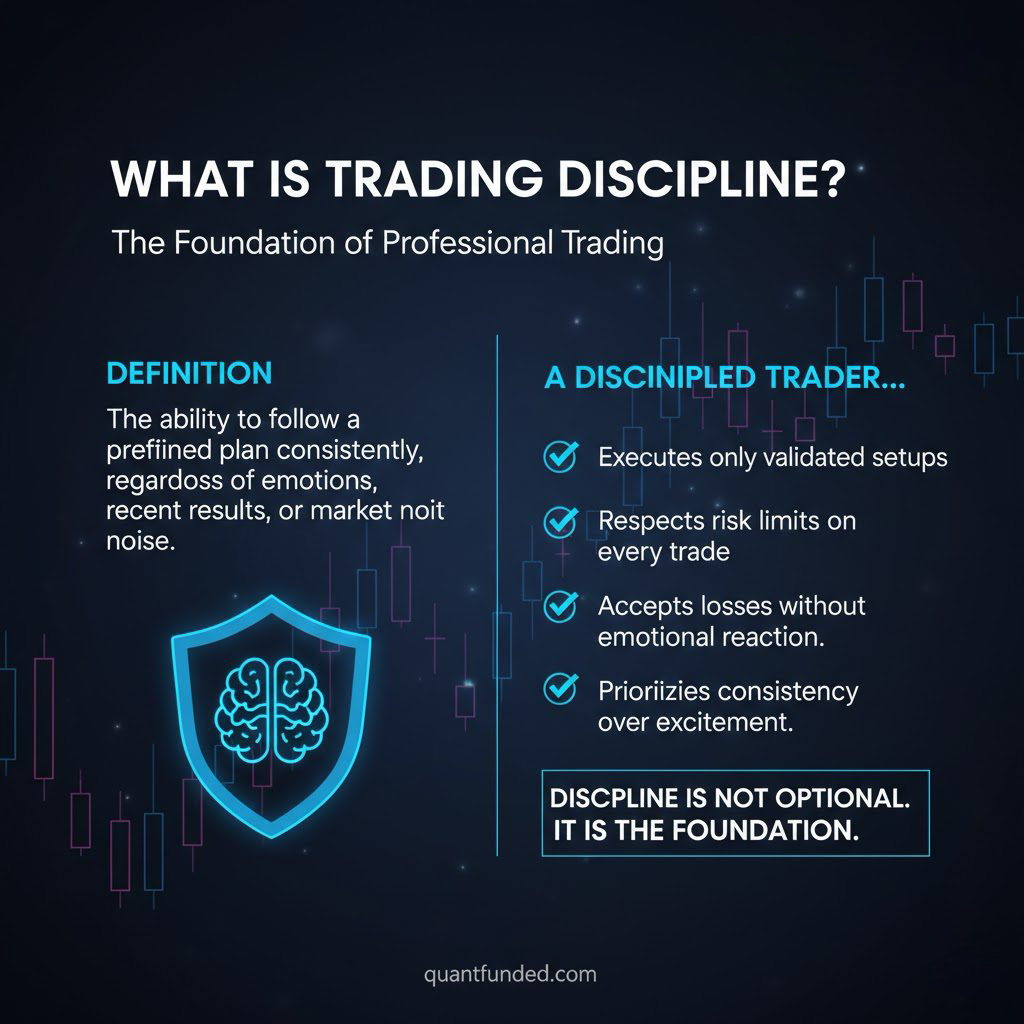
What Is Trading Impulse?
Impulse is the opposite of discipline. It is the urge to act without alignment to your plan, often driven by emotion rather than logic.
Impulsive behaviour commonly appears as:
- Entering trades out of boredom or fear of missing out
- Increasing lot size after losses
- Chasing price without confirmation
- Violating daily loss or drawdown rules
- Trading outside defined sessions
Impulse gives the illusion of control, but in reality, it introduces randomness and destroys consistency.
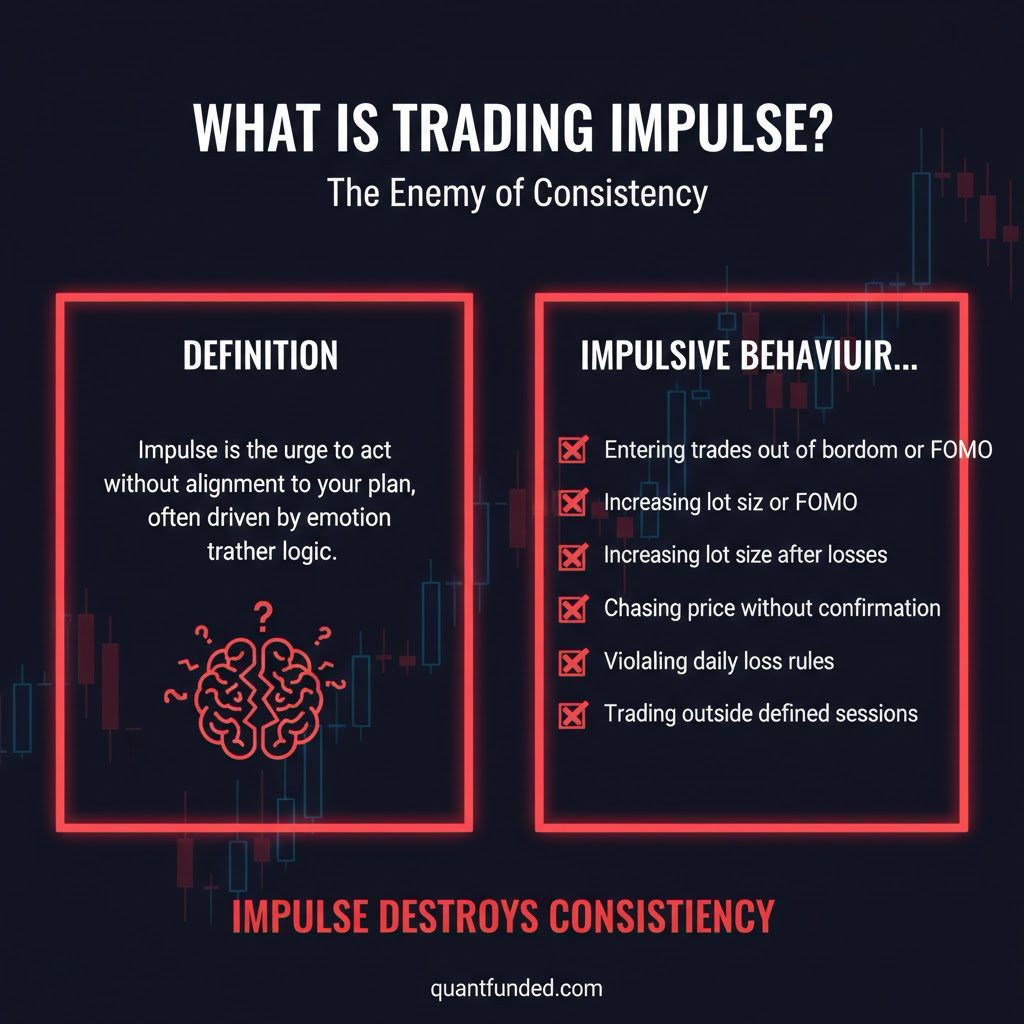
Why Discipline Matters More in a Prop Firm Environment
Prop firm trading is fundamentally different from casual retail trading.
In a prop firm challenge, you are operating under:
- Maximum daily loss limits
- Overall drawdown restrictions
- Risk consistency expectations
- Evaluation time pressure
One impulsive decision can invalidate weeks of disciplined execution.
This is why trading discipline is one of the most critical skills for success at Quant Funded. The rules are designed to reward traders who demonstrate control, patience, and consistency — not emotional reactions.
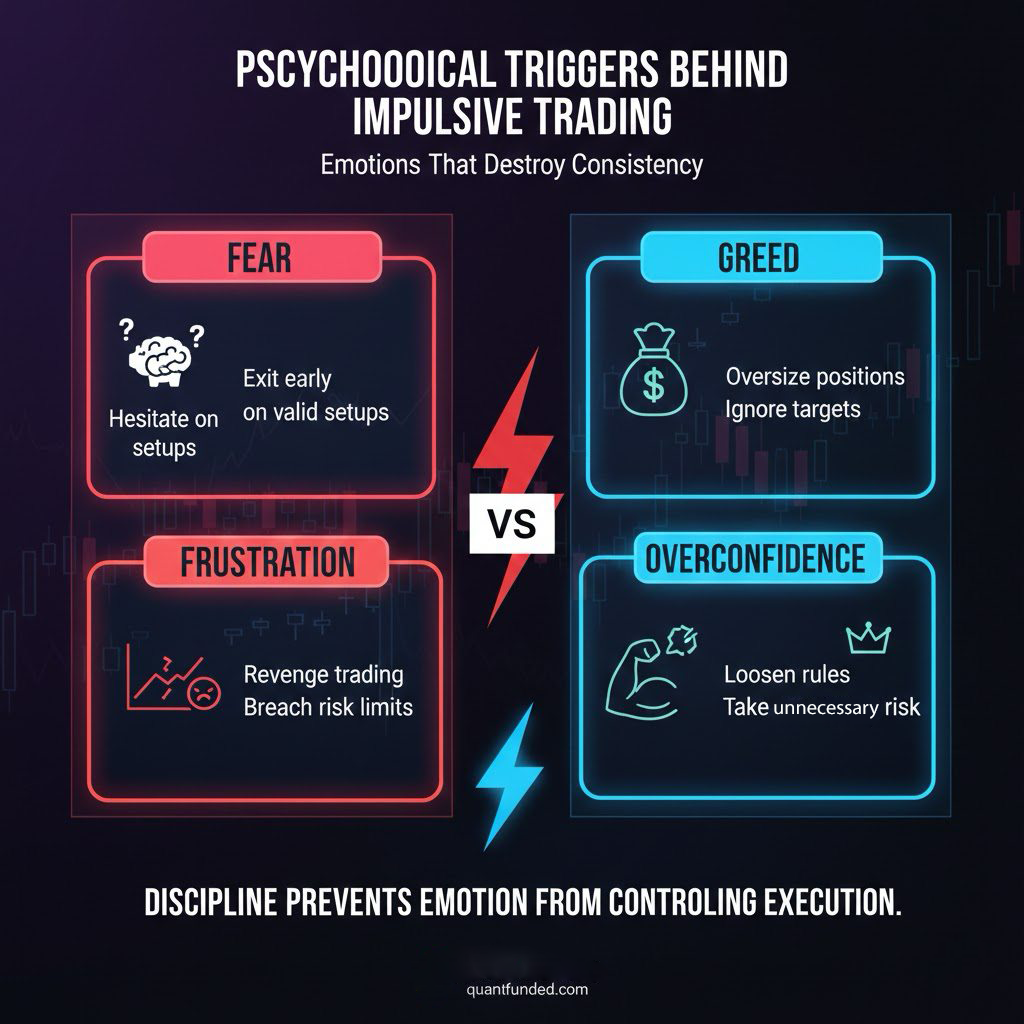
The Psychological Triggers Behind Impulsive Trading
Most impulsive trades come from predictable emotional triggers.
Fear
Fear causes traders to exit profitable positions too early or hesitate on valid setups after losses.
Greed
Greed leads to oversizing positions, ignoring targets, and attempting to “finish the challenge quickly.”
Frustration
After a drawdown or losing streak, frustration often triggers revenge trading — one of the fastest ways to breach risk limits.
Overconfidence
Winning streaks can be dangerous. Overconfidence leads traders to loosen rules and take unnecessary risk.
Discipline doesn’t eliminate these emotions — it prevents them from controlling execution.
Discipline Is a Process, Not Willpower
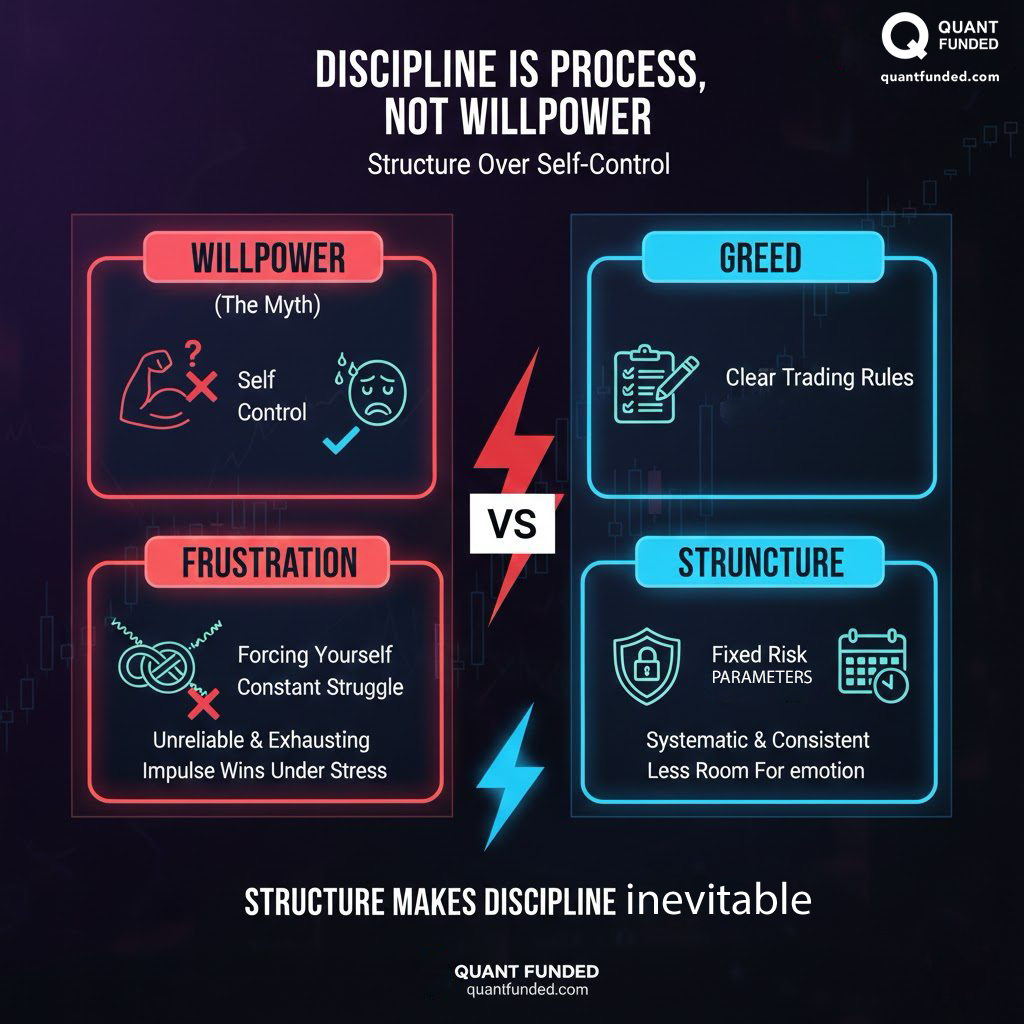
Many traders believe discipline is about “being strong” or “forcing yourself to behave.”
In reality, discipline comes from structure, not willpower.
Disciplined traders rely on:
- Clear trading rules
- Fixed risk parameters
- Predefined entry and exit criteria
- Routine and repetition
When structure is strong, impulse has less room to appear.
How Discipline Protects Risk Management
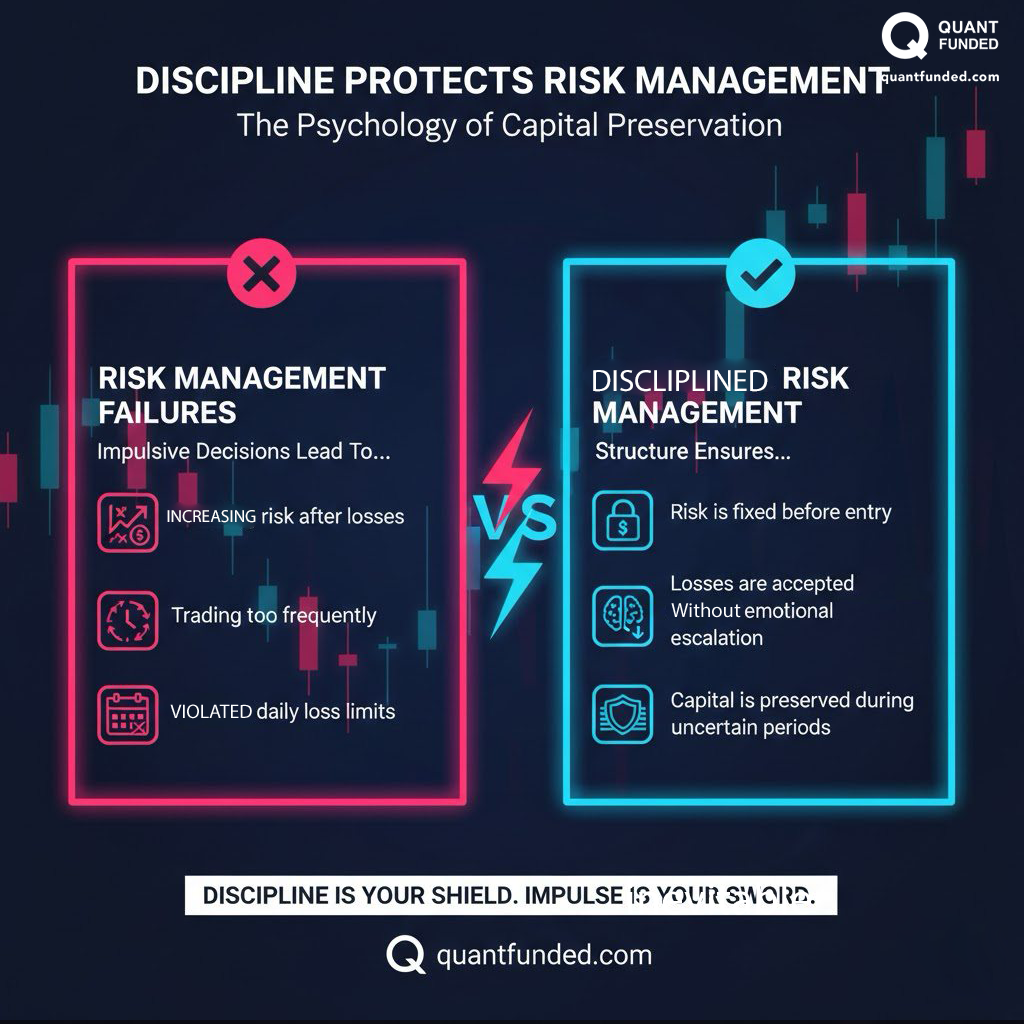
Risk management failures are almost always psychological failures.
Impulsive decisions lead to:
- Ignoring stop losses
- Increasing risk after losses
- Trading too frequently
- Violating daily loss limits
Discipline ensures that:
- Risk is fixed before entry
- Losses are accepted without emotional escalation
- Capital is preserved during uncertain periods
At Quant Funded, risk rules exist to protect both the trader and the firm. Discipline ensures those rules work in your favour.
Practical Ways to Strengthen Trading Discipline
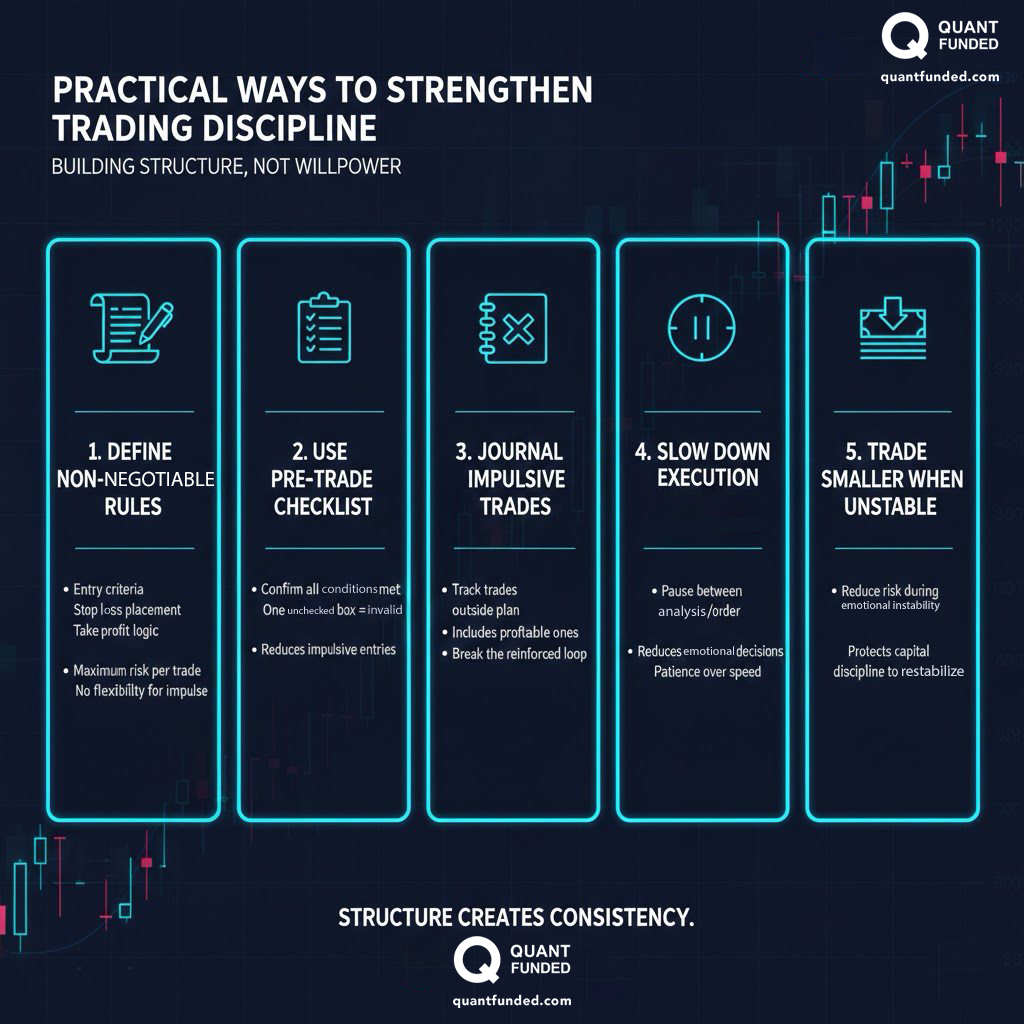
1. Define Non-Negotiable Rules
Your plan must clearly define:
- Entry criteria
- Stop loss placement
- Take profit logic
- Maximum risk per trade
If a rule is flexible, impulse will exploit it.
2. Use a Pre-Trade Checklist
Before every trade, confirm that all conditions are met. If one box is unchecked, the trade is invalid — no exceptions.
This simple habit dramatically reduces impulsive entries.
3. Journal Impulsive Trades Separately
Track trades taken outside your plan — including profitable ones.
Impulse that “worked” reinforces bad habits. Awareness breaks that loop.
4. Slow Down Execution
Impulse thrives in speed. Discipline thrives in patience.
Create a pause between analysis and execution. Even a short delay reduces emotional decision-making.
5. Trade Smaller During Emotional Instability
Reducing risk during periods of frustration or overconfidence protects capital while allowing discipline to re-stabilize.
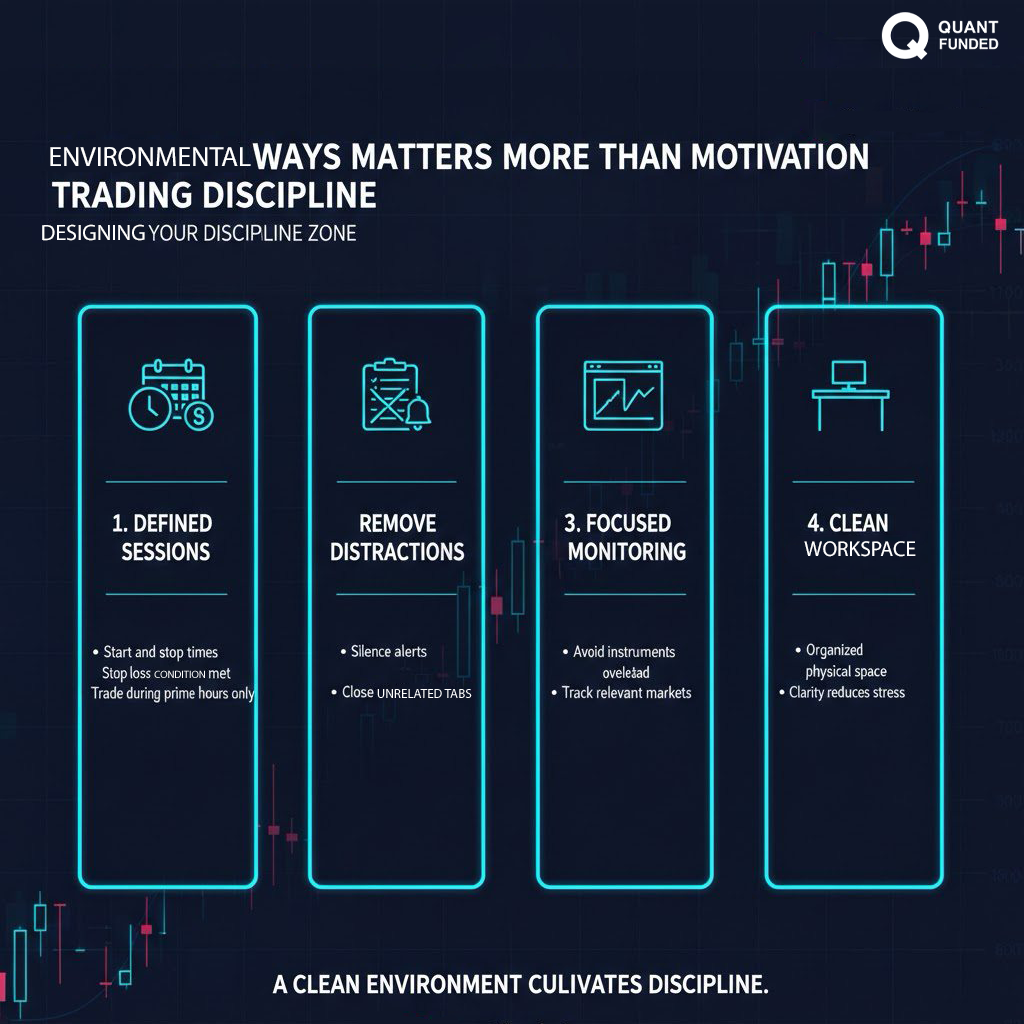
Environment Matters More Than Motivation
Your trading environment directly influences your behaviour.
To support discipline:
- Trade during defined sessions only
- Remove distractions and notifications
- Avoid watching multiple instruments unnecessarily
- Set clear start and stop times
A clean environment reduces emotional stimulation and supports consistency.
Discipline Compounds Over Time
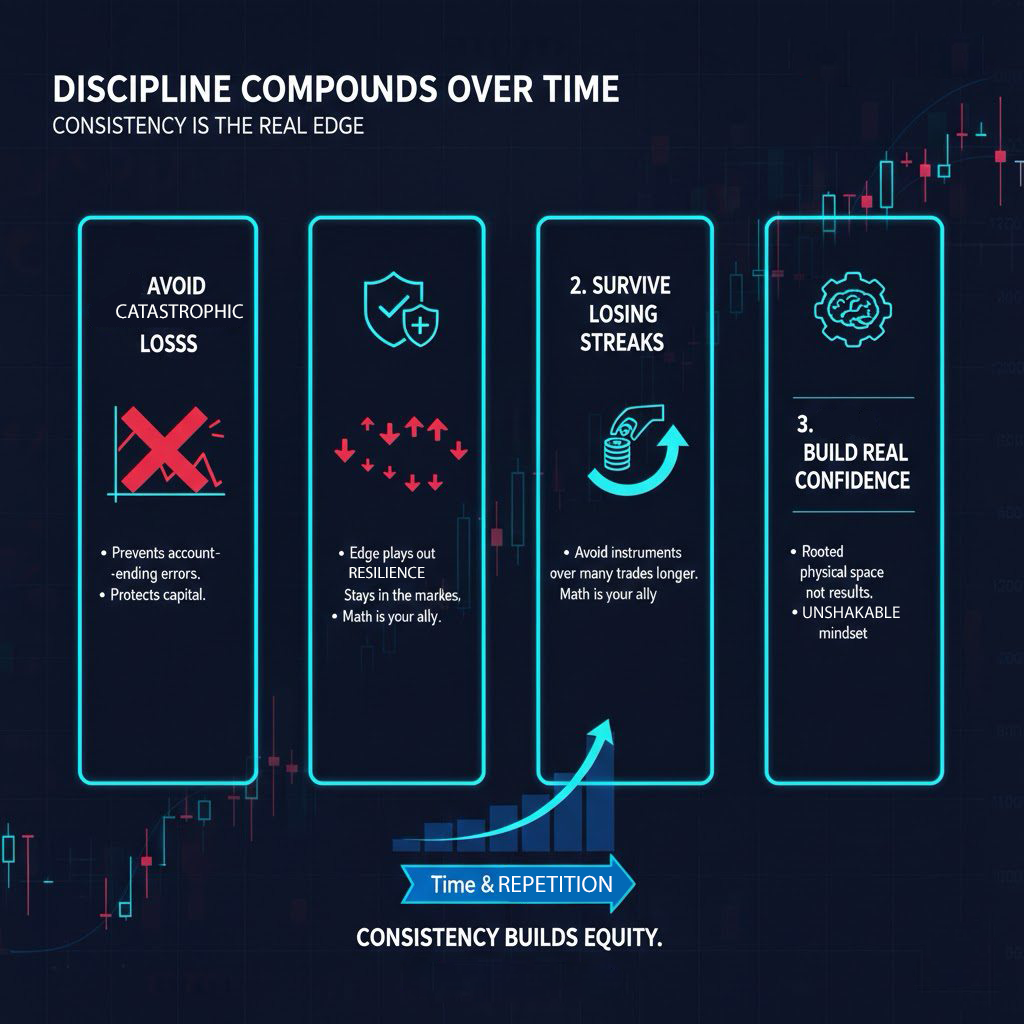
Impulse seeks immediate gratification. Discipline compounds slowly — but powerfully.
Over time, disciplined traders:
- Avoid catastrophic losses
- Survive losing streaks
- Let probabilities work in their favour
- Build confidence rooted in process, not emotion
In prop firm trading, consistency is the real edge.
The Quant Funded Perspective
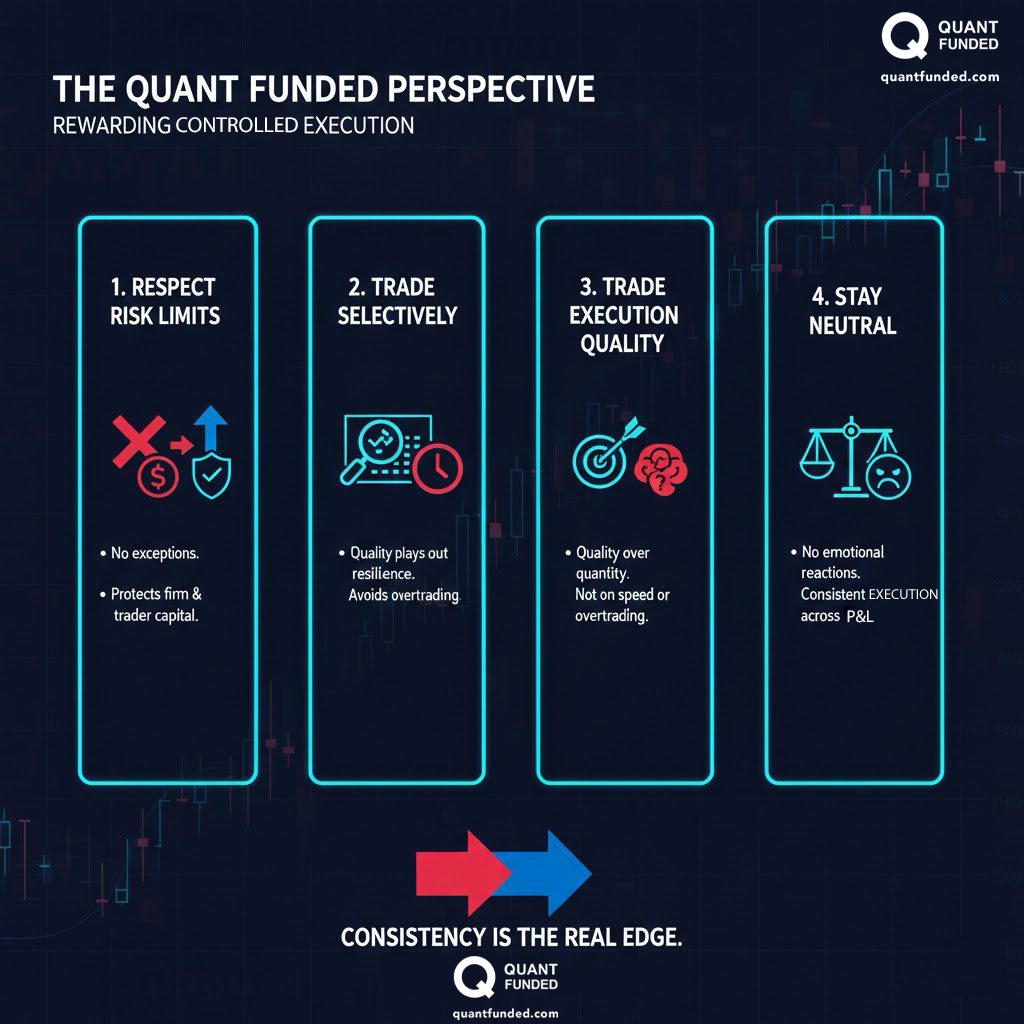
At Quant Funded, our evaluation structure is intentionally designed to reward disciplined traders.
Traders who succeed:
- Respect risk limits without exception
- Trade selectively, not constantly
- Focus on execution quality, not speed
- Remain emotionally neutral across outcomes
Passing a challenge is not about aggressive trading — it’s about controlled execution over time.
Final Thoughts
Every trader faces the battle between discipline and impulse.
Markets will tempt you with fast moves, emotional swings, and the promise of quick success. But sustainable profitability is built on restraint, structure, and consistency.
Impulse may win individual moments.
Discipline wins careers.
Mastering trading psychology is not about eliminating emotion — it’s about choosing discipline every time emotion tries to take control.
At Quant Funded, discipline isn’t just encouraged.
It’s required.