
Entering the world of trading can feel overwhelming. The fear of losing money, combined with the complexity of financial markets, often prevents traders from taking their first step. This is where paper trading becomes a powerful tool.
At Quant Funded, we believe that mastering the basics in a risk-free environment is essential before transitioning to live markets. In this guide, you’ll learn how paper trading works, why it matters, and how to use it effectively to become a consistent trader.
What Is Paper Trading?
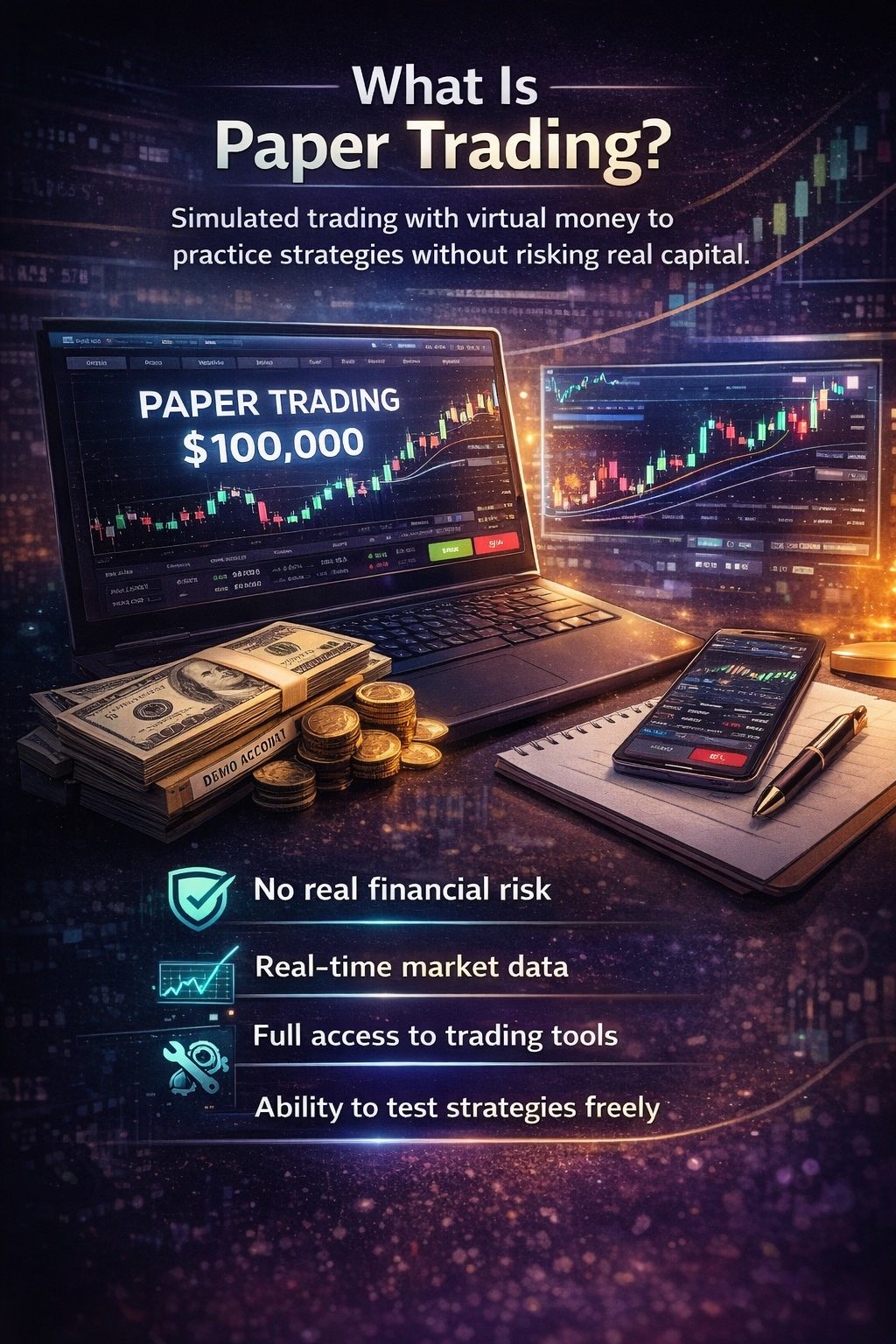
Paper trading, also known as simulated trading, is the process of buying and selling financial instruments using virtual funds instead of real money.
Originally, traders practiced by writing trades on paper—hence the name. Today, modern platforms provide advanced simulation environments that closely replicate real market conditions.
Key Features of Paper Trading:
- No real financial risk
- Real-time market data
- Full access to trading tools
- Ability to test strategies freely
This makes paper trading an ideal starting point for beginners and a valuable testing ground for experienced traders.
How Paper Trading Works
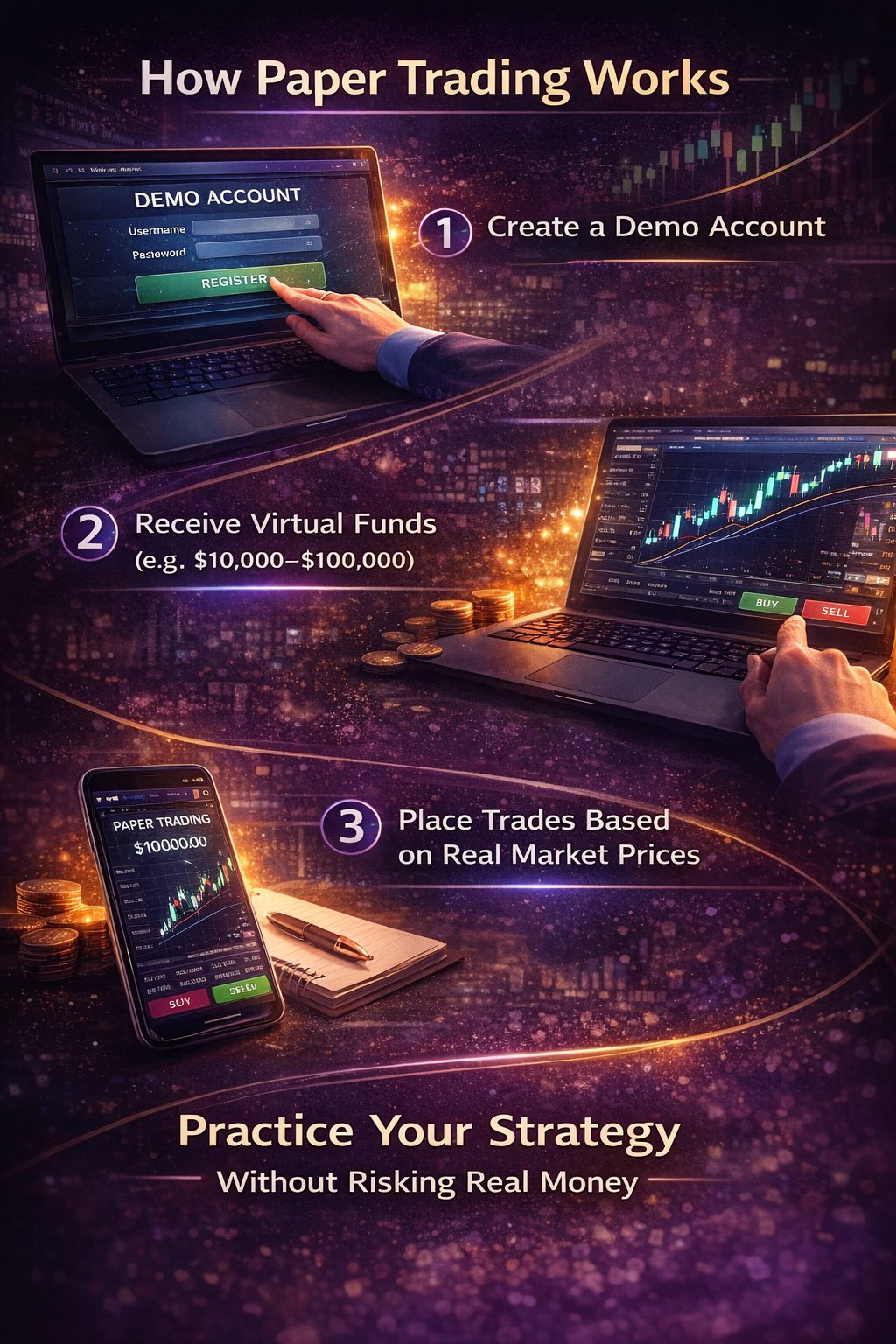
Paper trading platforms simulate real trading environments by allowing users to execute trades with virtual capital.
Here’s how it typically works:
- You create a demo account
- You receive virtual funds (e.g., $10,000–$100,000)
- You place trades based on real market prices
- You track performance just like a live account
The goal is simple:
Practice your strategy without risking real money.
Why Paper Trading Is Essential for Beginners
For new traders, jumping straight into live markets can be risky. Paper trading provides a safe environment to build foundational skills.
1. Builds Confidence
Trading can be intimidating at first. Paper trading helps you:
- Understand market mechanics
- Learn how trading platforms work
- Gain confidence without financial pressure
2. Develops and Tests Strategies
Before risking real capital, you need a proven system.
Paper trading allows you to:
- Test different strategies
- Identify what works and what doesn’t
- Refine entry and exit rules
3. Improves Risk Management Skills
Risk management is one of the most critical aspects of trading.
With paper trading, you can practice:
- Setting stop-loss levels
- Managing position sizes
- Controlling drawdown
4. Accelerates Learning
Because there’s no financial risk, you can:
- Experiment more freely
- Learn from mistakes quickly
- Gain experience faster
The Role of Trading Psychology
While paper trading is an excellent training tool, it also highlights an important aspect of trading: psychology.
Emotions such as fear, greed, and impatience can influence decisions—even in a simulated environment.
Key Psychological Benefits:
- Builds discipline
- Encourages consistency
- Helps you develop a structured routine
However, it’s important to note that trading with real money introduces stronger emotional pressure.
Advantages of Paper Trading
Paper trading offers several benefits that make it essential for trader development.
✔ Risk-Free Environment
You can practice without worrying about losing money.
✔ Strategy Testing
Test multiple strategies before committing real capital.
✔ Platform Familiarity
Learn how to execute trades efficiently.
✔ Performance Tracking
Analyze your results and identify areas for improvement.
Limitations of Paper Trading
Despite its advantages, paper trading has some limitations that traders must understand.
✖ No Emotional Pressure
Trading with virtual money doesn’t replicate the stress of real losses.
✖ Execution Differences
Real markets may include slippage, spreads, and delays not reflected in demo accounts.
✖ Overconfidence Risk
Success in simulation doesn’t guarantee success in live trading.
Paper Trading vs. Live Trading
Understanding the difference between paper trading and live trading is crucial for a smooth transition.
| Feature | Paper Trading | Live Trading |
| Risk | None | Real financial risk |
| Emotions | Low | High |
| Execution | Simulated | Real market conditions |
| Learning Curve | Faster | More complex |
The goal is to use paper trading as preparation—not a permanent substitute.
How to Start Paper Trading
Getting started with paper trading is simple.
Step 1: Choose a Platform
Select a trading platform that offers demo accounts with real-time data.
Step 2: Set Up Your Account
Register and choose a starting balance similar to what you plan to trade with.
Step 3: Trade Like It’s Real
Avoid taking unrealistic risks just because it’s virtual money.
Step 4: Track Your Performance
Keep a trading journal to record:
- Entry and exit points
- Strategy used
- Emotional state
Tips for Effective Paper Trading
To maximize the benefits of paper trading, follow these best practices:
1. Treat It Like Real Money
Discipline starts in simulation. Trade as if your capital is at risk.
2. Focus on One Strategy
Avoid switching strategies too often. Master one approach first.
3. Set Realistic Goals
Aim for consistency—not unrealistic gains.
4. Analyze Every Trade
Review both winning and losing trades to improve.
5. Transition Gradually
Move to live trading slowly, starting with smaller position sizes.
Why Paper Trading Matters for Funded Traders
For traders aiming to pass a prop firm challenge like Quant Funded, paper trading is a critical step.
Benefits for Funded Traders:
- Helps you meet evaluation criteria
- Reduces risk of rule violations
- Builds consistency before live trading
- Strengthens discipline and execution
Paper trading acts as a bridge between theory and real-world trading success.
Final Thoughts
Paper trading is one of the most valuable tools for traders at all levels. It provides a safe environment to learn, experiment, and refine your strategy without financial risk.
However, it’s important to remember that paper trading is just the beginning. The real challenge comes when transitioning to live markets, where emotions and real capital are involved.
At Quant Funded, we encourage traders to use paper trading as a foundation—then build on it with discipline, risk management, and continuous improvement.
Ready to Take the Next Step?
Join Quant Funded and transition from simulated trading to a professional trading environment. Test your skills, refine your strategy, and unlock your potential as a trader.
Start your journey today and turn practice into performance.
SEO Keywords: paper trading explained, what is paper trading, simulated trading account, trading without risk, demo trading for beginners, funded trading account, Quant Funded trading, paper trading vs live trading.