
Success in trading doesn’t come from luck—it comes from structure, discipline, and a well-defined strategy. Many traders enter the market with good ideas but fail to achieve consistency because they lack a clear, repeatable system.
At Quant Funded, we believe that building a solid trading strategy is the foundation of long-term profitability. In this guide, we’ll walk you through 10 essential steps to building a trading strategy that is structured, testable, and optimized for real market conditions.
Why You Need a Trading Strategy
Before diving into the steps, it’s important to understand why a trading strategy is crucial.
A well-defined strategy helps you:
- Eliminate emotional decision-making
- Maintain consistency
- Manage risk effectively
- Improve long-term performance
Without a plan, trading becomes gambling. With a plan, it becomes a professional process.

Step 1: Choose Your Trading Instrument
The first step is selecting what you want to trade.
Popular options include:
- Forex pairs (EUR/USD, GBP/USD)
- Indices (S&P 500, Nasdaq)
- Commodities (Gold, Oil)
Choose an instrument you understand. Familiarity with a market allows you to interpret price action, news, and volatility more effectively.
Pro Tip: Focus on one or two instruments initially to build expertise.

Step 2: Select the Right Indicators
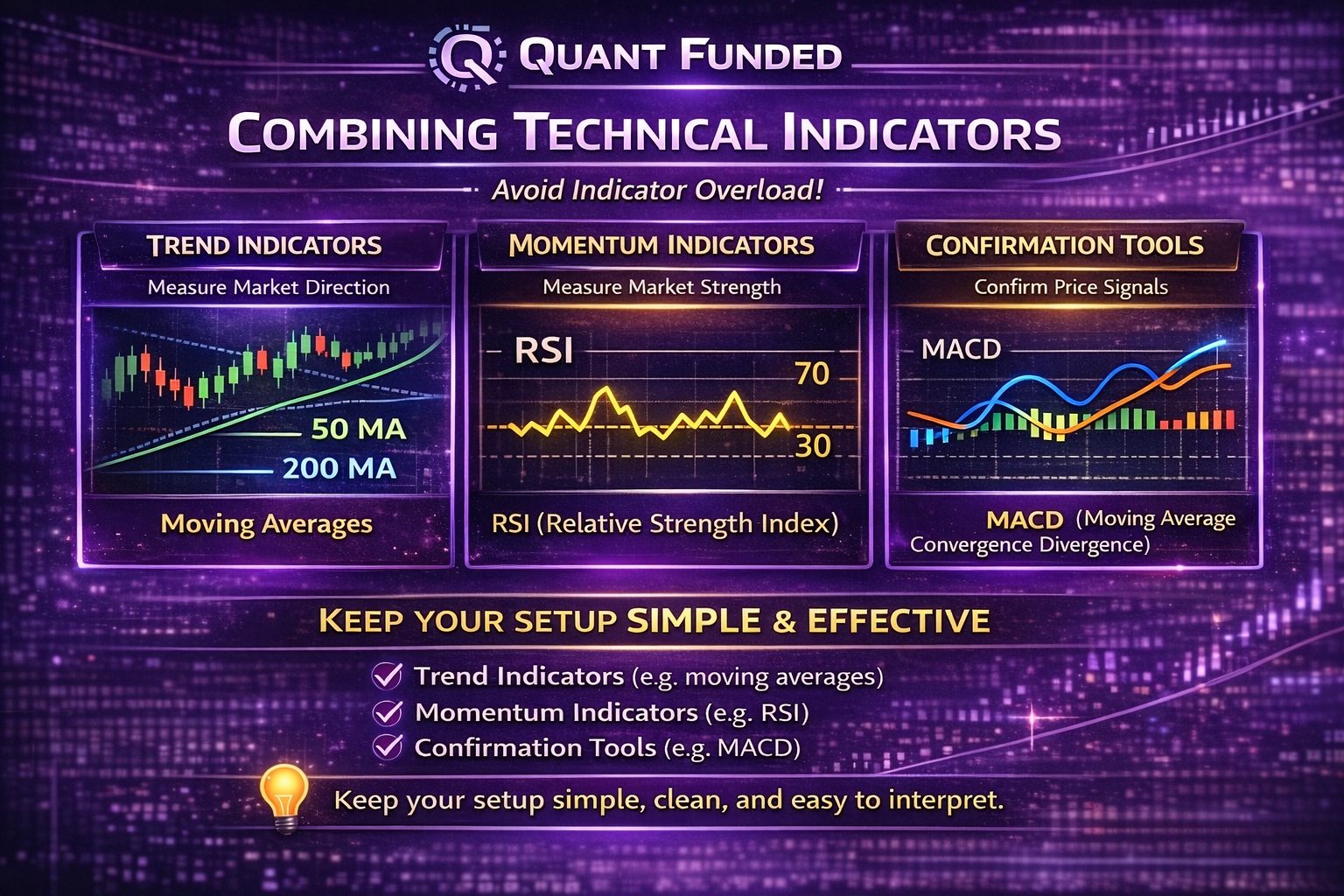
Technical indicators help you analyze the market, but using too many can lead to confusion.
A strong approach is to combine indicators that measure different aspects of the market:
- Trend indicators (e.g., moving averages)
- Momentum indicators (e.g., RSI)
- Confirmation tools (e.g., MACD)
Keep your setup simple, clean, and easy to interpret.
Step 3: Customize Indicator Settings
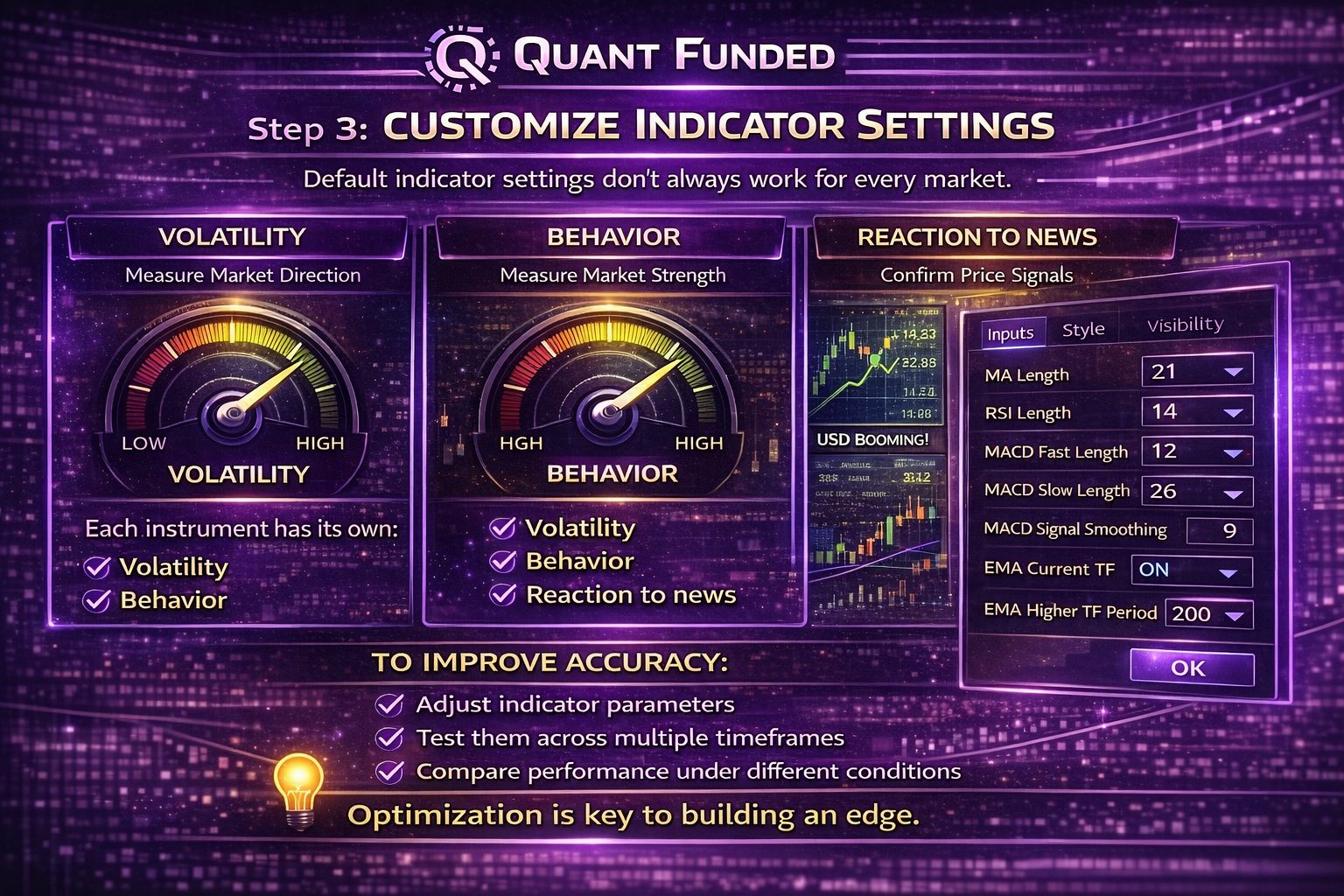
Default indicator settings don’t always work for every market.
Each instrument has its own:
- Volatility
- Behavior
- Reaction to news
To improve accuracy:
- Adjust indicator parameters
- Test them across multiple timeframes
- Compare performance under different conditions
Optimization is key to building an edge.
Step 4: Define Clear Entry and Exit Rules
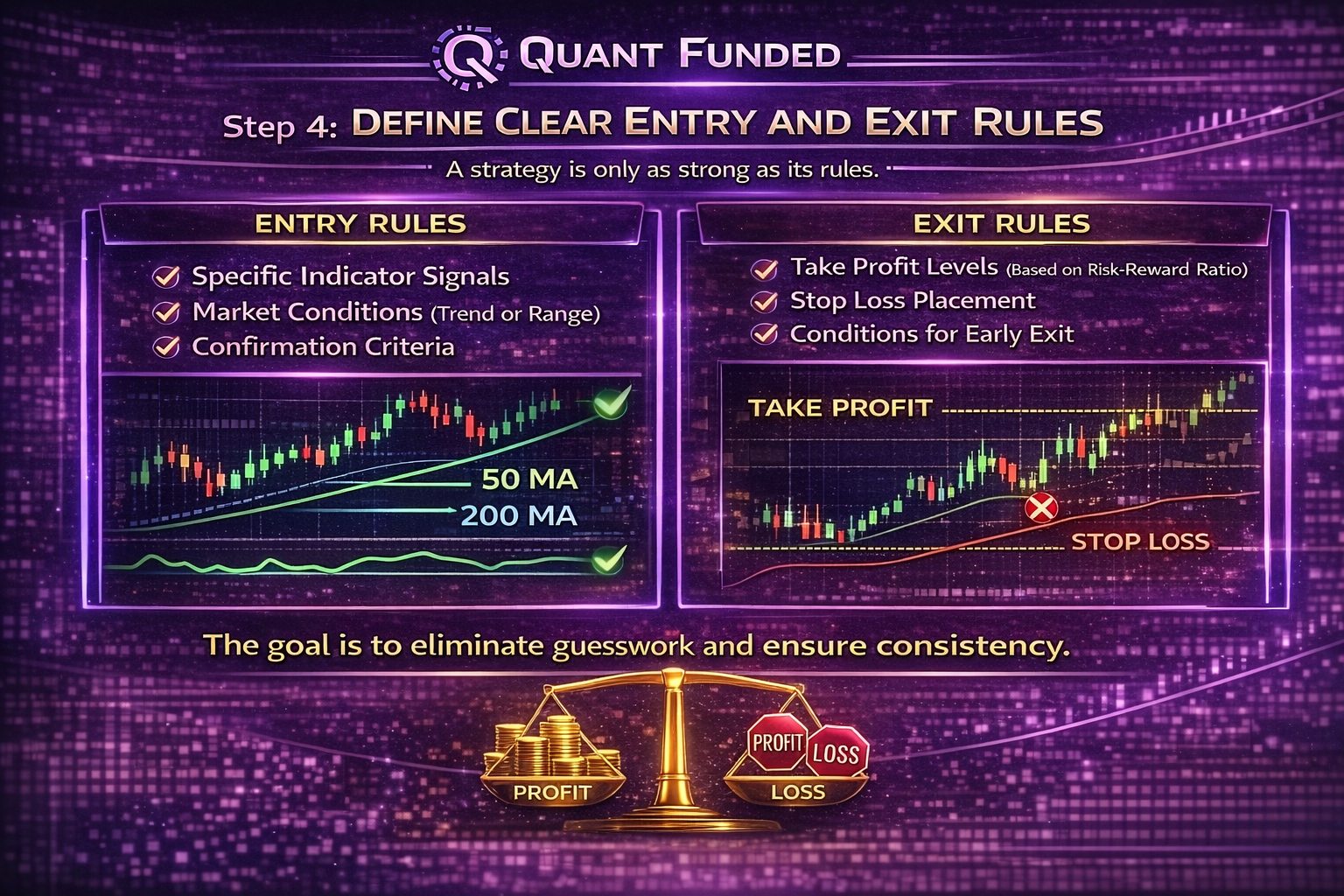
A strategy is only as strong as its rules.
Entry Rules Should Include:
- Specific indicator signals
- Market conditions (trend or range)
- Confirmation criteria
Exit Rules Should Include:
- Take profit levels (based on risk-reward ratio)
- Stop loss placement
- Conditions for early exit
The goal is to eliminate guesswork and ensure consistency.
Step 5: Set Your Risk Per Trade
Risk management is the most important part of any trading strategy.
A common rule is to risk:
0.25% to 1% of your account per trade
Why This Matters:
- Protects your capital
- Allows you to survive losing streaks
- Keeps you within funded account rules
Example:
- Account size: $100,000
- Risk per trade: 0.5% ($500)
This approach ensures long-term sustainability.

Step 6: Backtest Your Strategy
Backtesting allows you to test your strategy using historical data.
What to Look For:
- Win rate
- Risk-reward ratio (RRR)
- Drawdown
- Consistency over time
Best Practices:
- Test at least 6–12 months of data
- Include different market conditions
- Avoid overfitting your strategy
Backtesting helps you identify weaknesses before risking real capital.

Step 7: Validate in a Demo Environment
Before going live, test your strategy in real-time market conditions using a demo account.
This step helps you:
- Practice execution
- Test discipline
- Identify psychological challenges
Treat demo trading seriously—this is where habits are built.

Step 8: Transition to Live Trading
Once your strategy proves consistent, you can move to live trading.
Tips for a Smooth Transition:
- Start with smaller position sizes
- Limit the number of trades per day
- Avoid high-impact news events initially
Consistency is more important than aggressive profits.

Step 9: Track and Evaluate Performance
Tracking your performance is essential for growth.
Key Metrics to Monitor:
- Win rate
- Average profit vs. loss
- Drawdown
- Risk-reward ratio
Keep a trading journal and review your results regularly.
This allows you to:
- Identify patterns
- Correct mistakes
- Improve decision-making

Step 10: Continuously Optimize Your Strategy
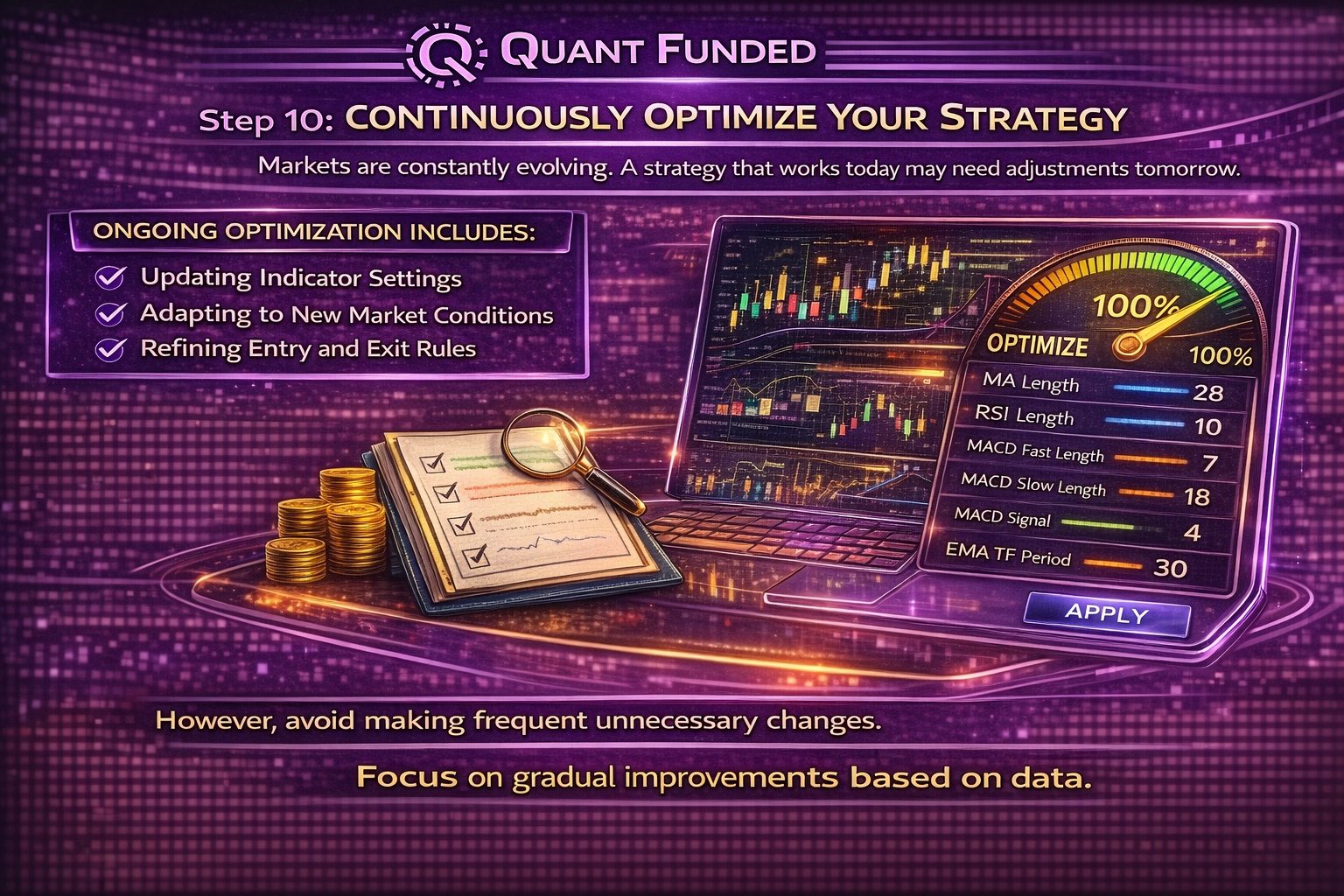
Markets are constantly evolving. A strategy that works today may need adjustments tomorrow.
Ongoing Optimization Includes:
- Updating indicator settings
- Adapting to new market conditions
- Refining entry and exit rules
However, avoid making frequent unnecessary changes. Focus on gradual improvements based on data.
Common Mistakes to Avoid
Even with a structured approach, traders often make critical errors.
Avoid These Pitfalls:
❌ Overcomplicating your strategy
❌ Ignoring risk management
❌ Skipping backtesting
❌ Trading without a plan
❌ Letting emotions control decisions
Simplicity and discipline are your biggest advantages.

Why a Structured Strategy Matters for Funded Traders
If you’re trading with a prop firm like Quant Funded, having a solid strategy is even more important.
Benefits:
- Helps you meet evaluation criteria
- Prevents rule violations
- Improves consistency
- Builds long-term profitability
Funded trading rewards discipline—not randomness.

Final Thoughts
Building a profitable trading strategy takes time, effort, and continuous refinement. By following these 10 steps, you create a structured approach that removes emotion and improves consistency.
Remember:
- Focus on process over profits
- Manage risk at all times
- Stay disciplined and patient
At Quant Funded, we support traders who are committed to growth, structure, and long-term success.
Ready to Build Your Trading Edge?
Join Quant Funded today and put your trading strategy to the test in a professional environment. With the right system and mindset, consistent profitability is within reach.